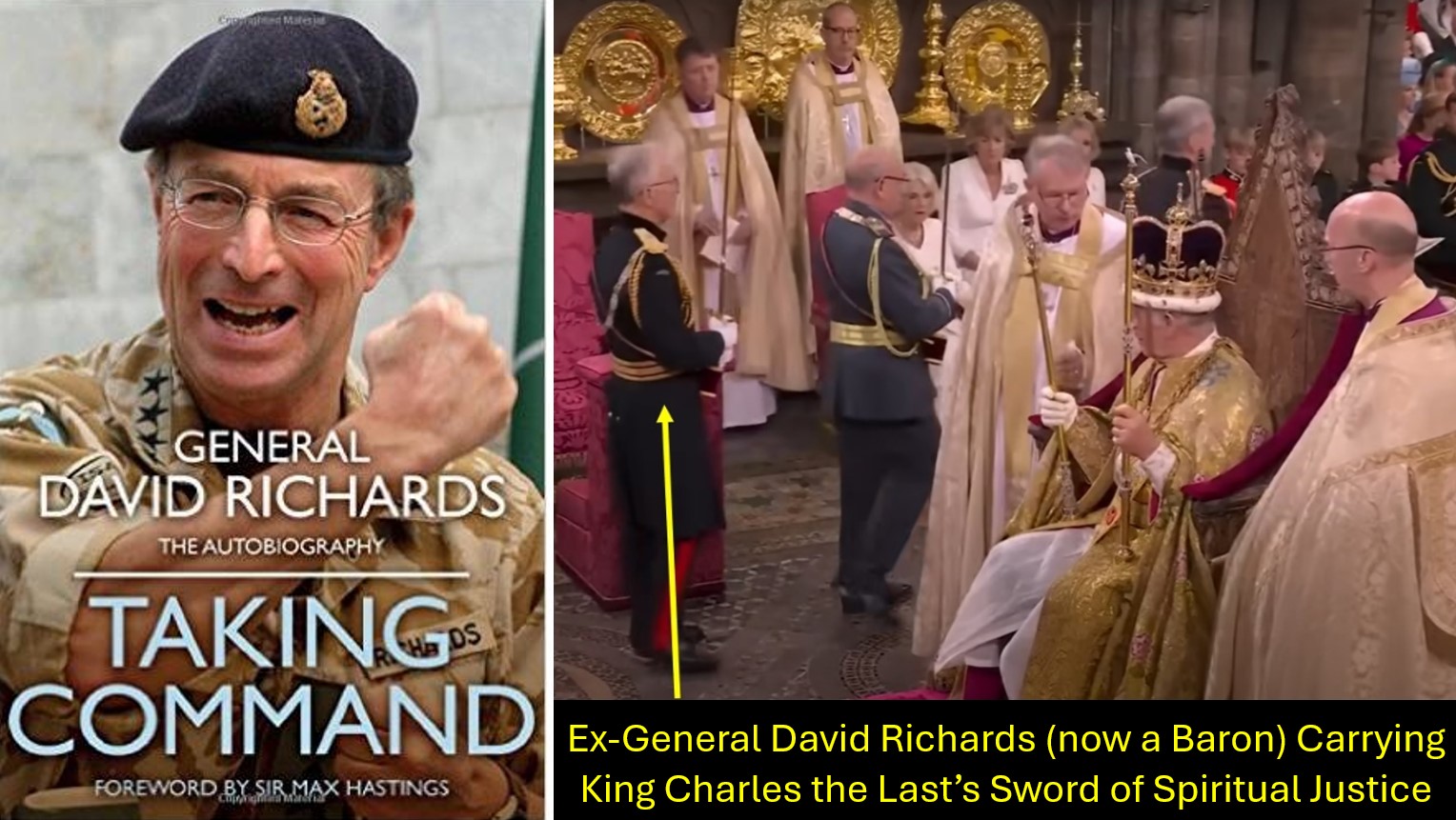
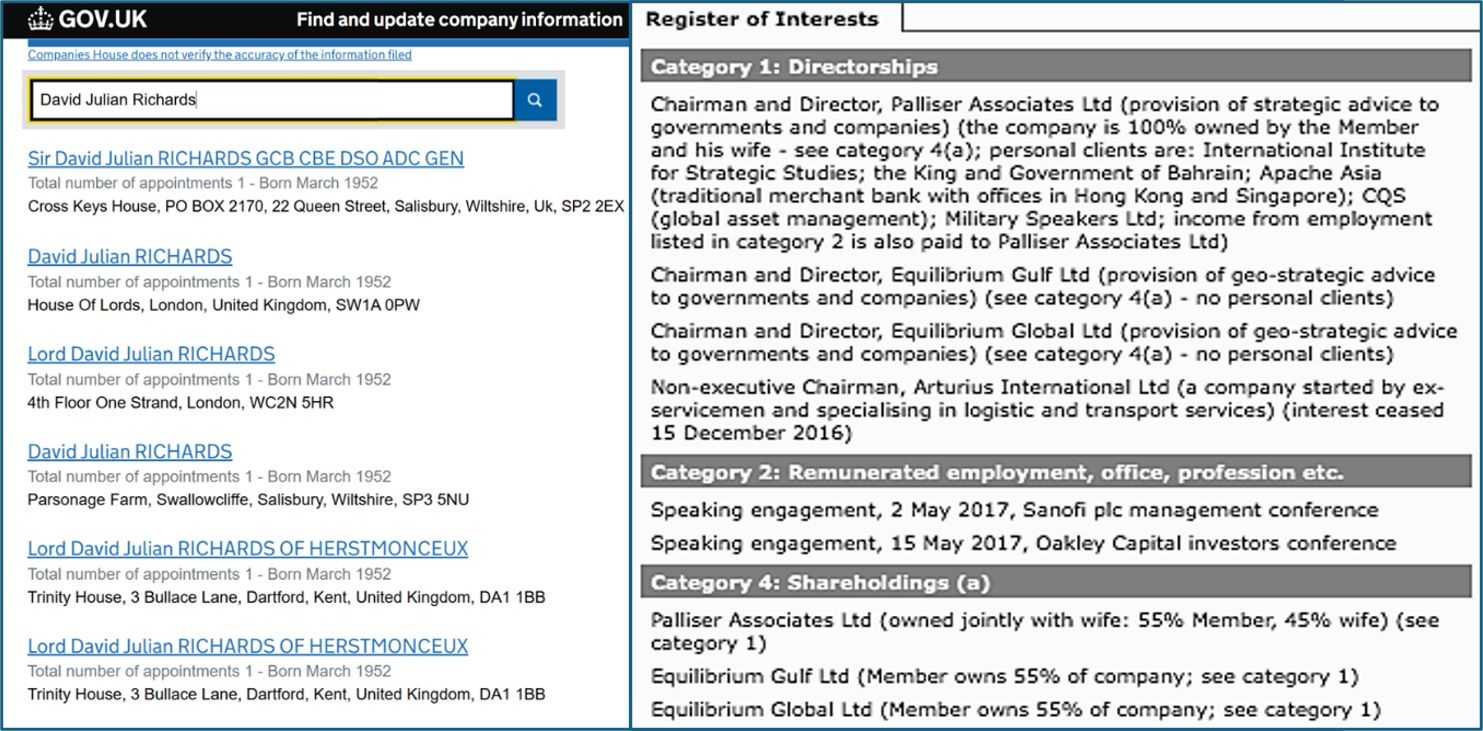
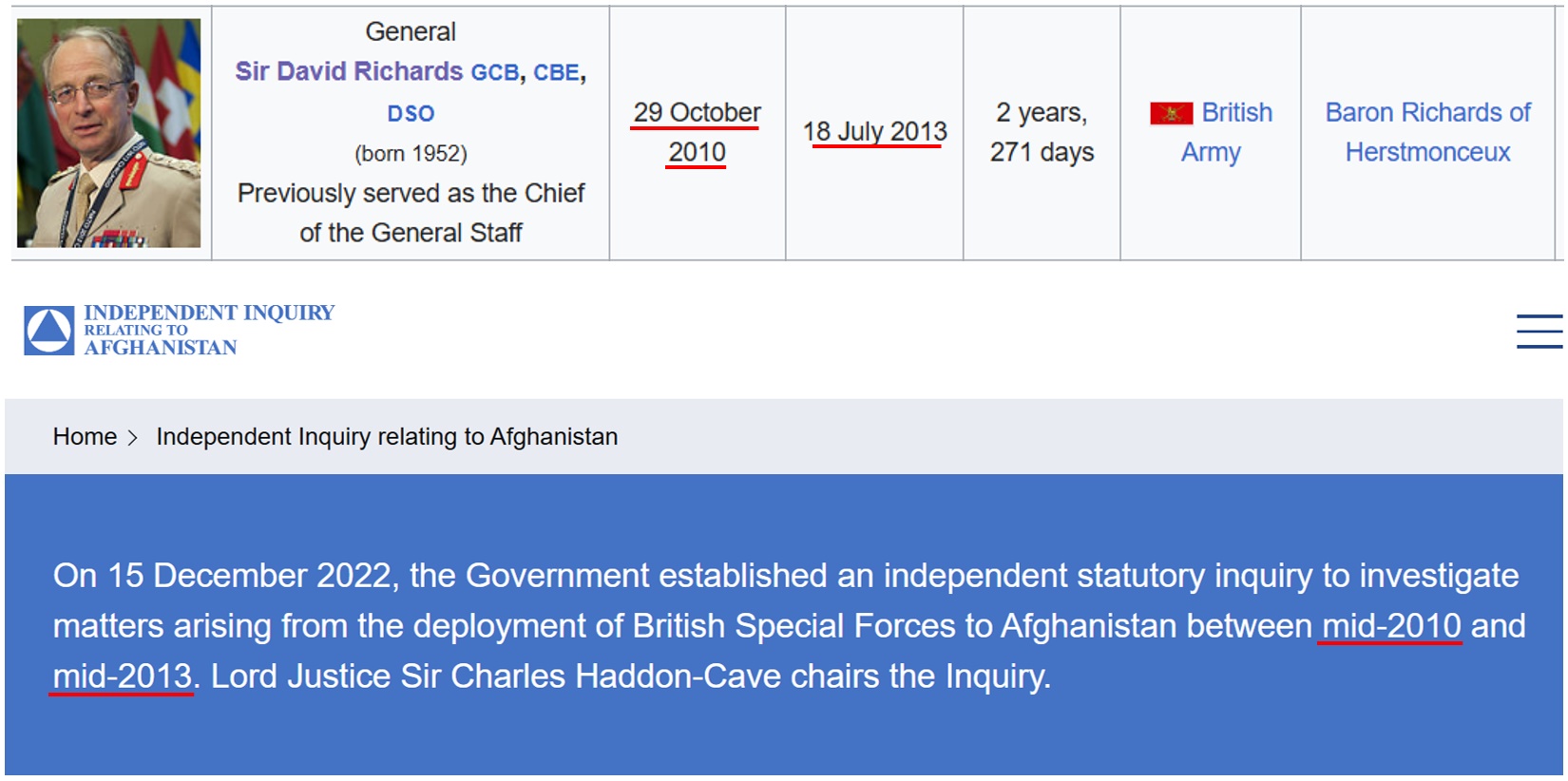
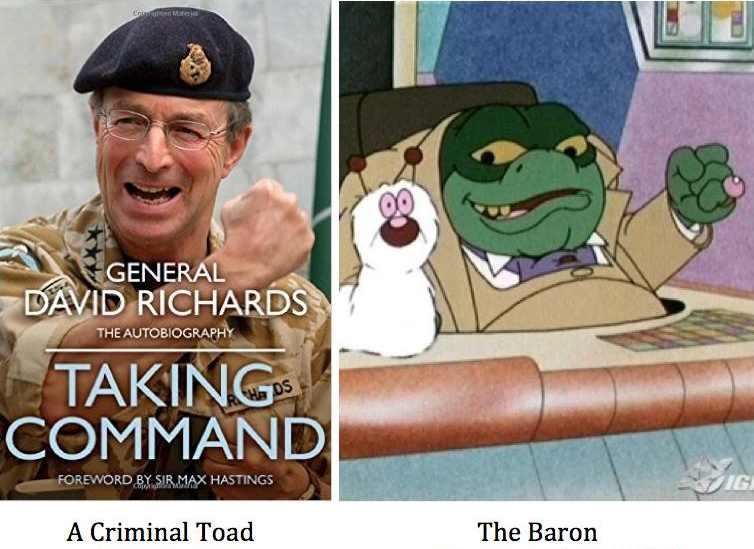
Born in 1952 to a British military family on deployment in Egypt and living in colonial outposts as a child, Richards witnessed the decline the British Empire at a very impressionable age. He’ll have followed news of British actions in Kenya, Malaysia, Yemen and Oman, and will remember the greatest blow vividly: Egypt’s nationalization of the Suez Canal with American backing in 1957. Destined to be a soldier, Richards joined the army in 1971 and ended his career forty-two years later, in July 2013. He was in-line to be knighted and when registering his first private business interest (Palliser Associates Limited Companies House listing) on 16 August 2013 he used the title “Sir David Richards”. But the New Year’s Honours came and went, as did Richards’ knighthood. He did receive a peerage a couple of months later but demoted to Baron, Baron Richards of Herstmonceux. Was that a rebuke by the then Prime Minister David Cameron over the extra judicial killings in Afghanistan? From BBC’s Panorama programme we now know:
"Prime Minister David Cameron was repeatedly warned during his tenure [2010-16]
that UK Special Forces were killing civilians in Afghanistan [under Richards’ command]."
And these were not the first allegations of extra judicial killings in Helmand, the British area of responsibility in Afghanistan. The British Justice Advisor to Helmand in 2007/08 compared British forces’ kill-capture operations to the CIA Phoenix Program run during the American war in Vietnam. That was Frank Ledwidge - a British army veteran of the Balkans and Iraq, a professor, barrister and author. In his 2013 book Investment in Blood: The True Cost of Britain's Afghan War Mr Ledwidge said:
“A new military approach was introduced: the ‘capture or kill’ policy… there was at least as much killing as there was capturing.
This tactic, like so much else in the current phase of the Afghan War, was more than a little redolent of the desperate days
of the Vietnam War, when the CIA instituted Operation Phoenix to target key Viet Cong officials.”
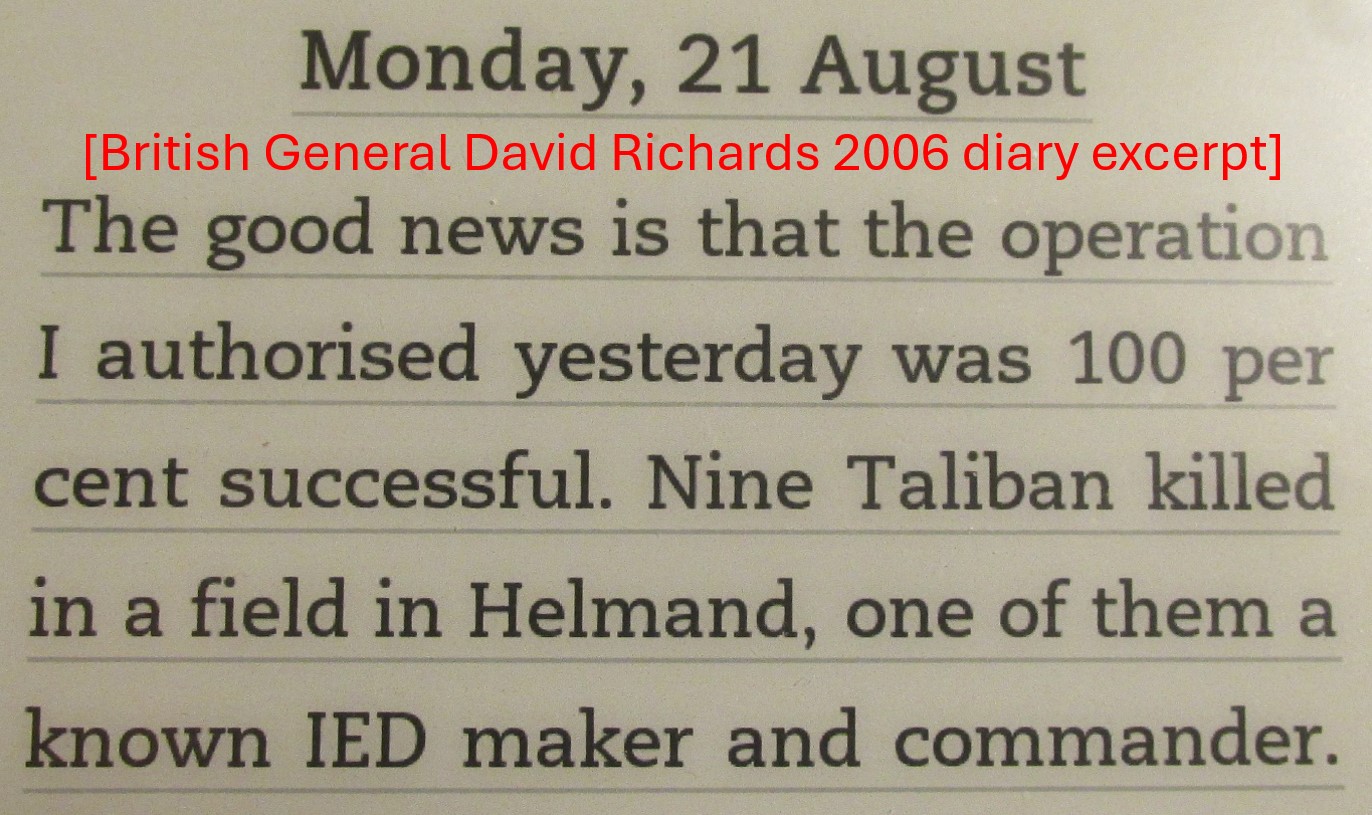
Richards Afghan command (2006/07) preceded Frank Ledwidge’s tour so I can’t link him directly to Ledwidge’s assertions but they do show extra judicial killings (EJKs) were a reality among NATO forces in 2007/08, if not earlier. This 21 August 2006 diary entry by Richards, when you understand military euphemisms, more than hints at executions rather than combat deaths:
"The good news is that the operation I authorized yesterday was 100% successful.
Nine Taliban killed in a field in Helmand, one of them a known IED maker and commander.”
Based on my research I suspect 'maverick’ Richards instigated the EJK policy during his 2006/07 Afghan command and enacted it again while Chief of the Defence Staff (2010-13), but can’t prove it. I can prove the crimes I witnessed during my 2012 Afghan tour and how they implicate Richards.
Opium Profiteering
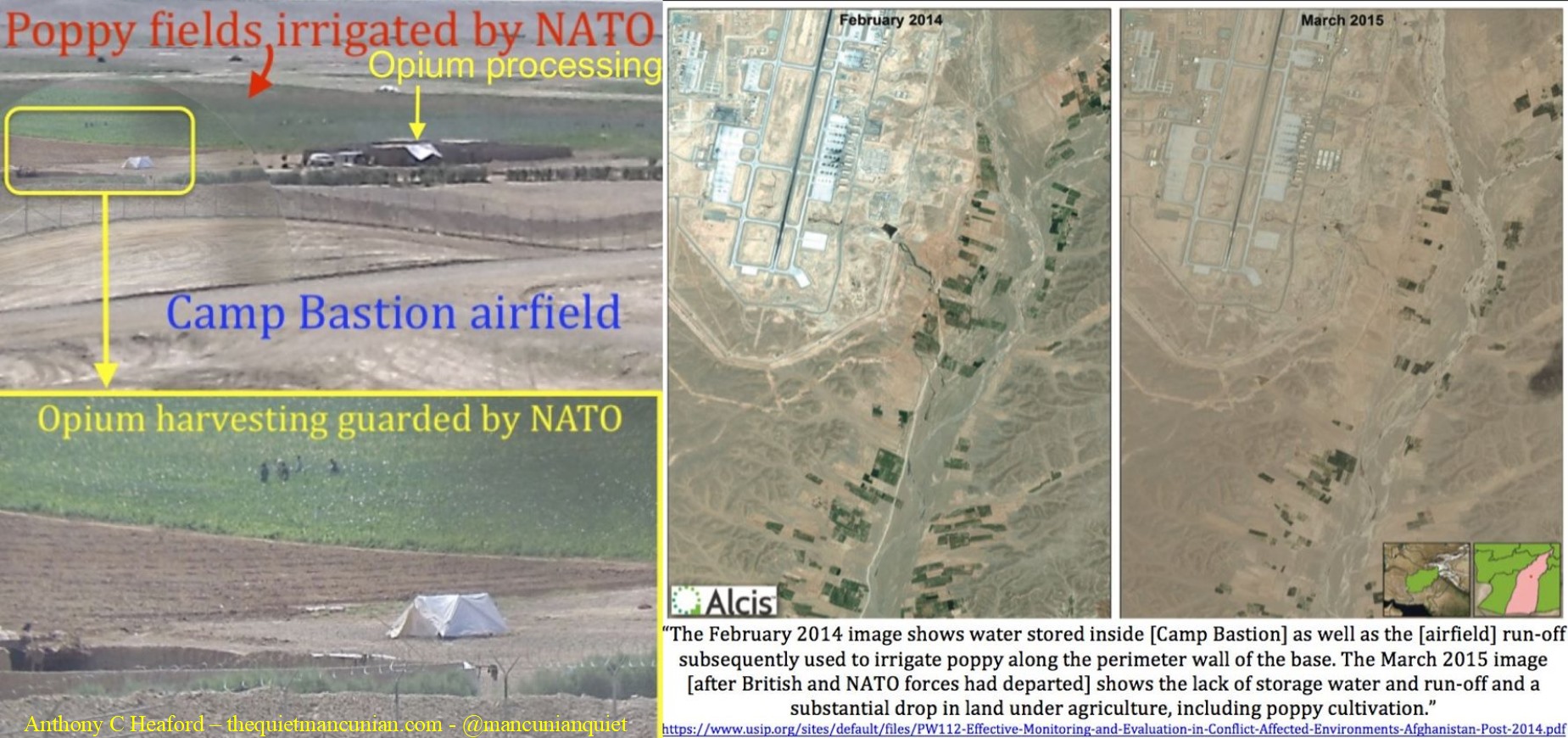
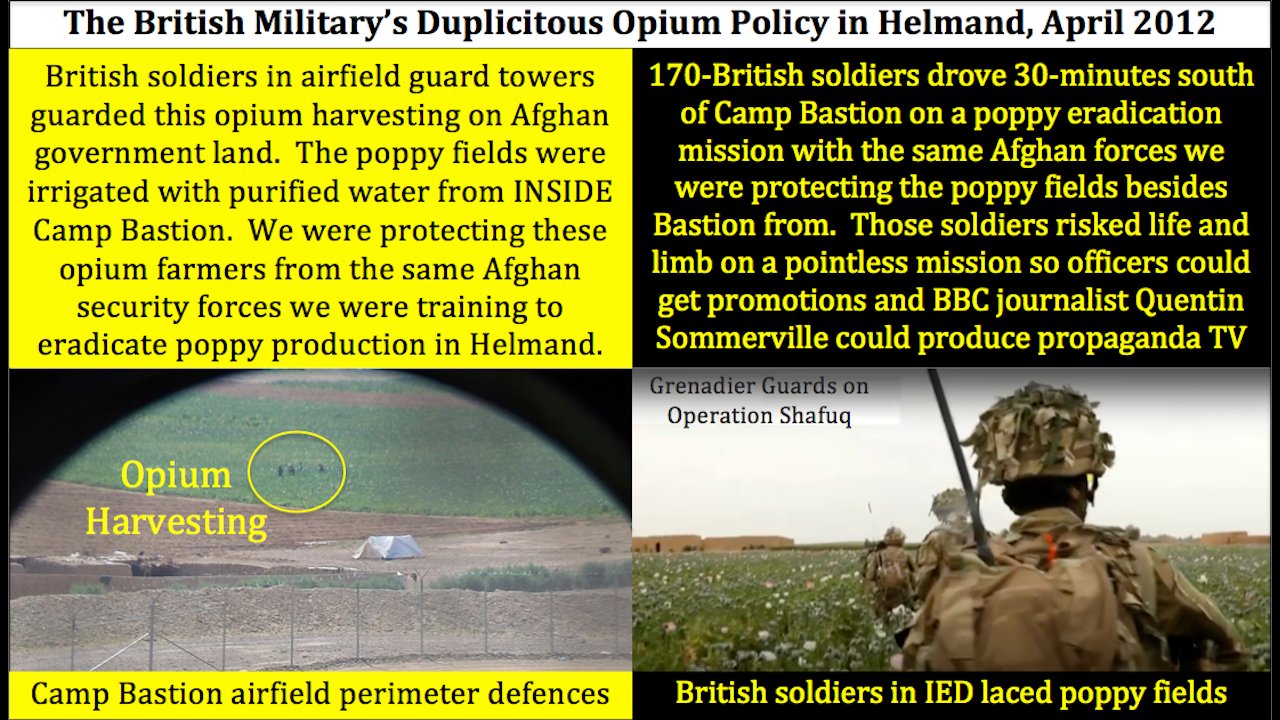
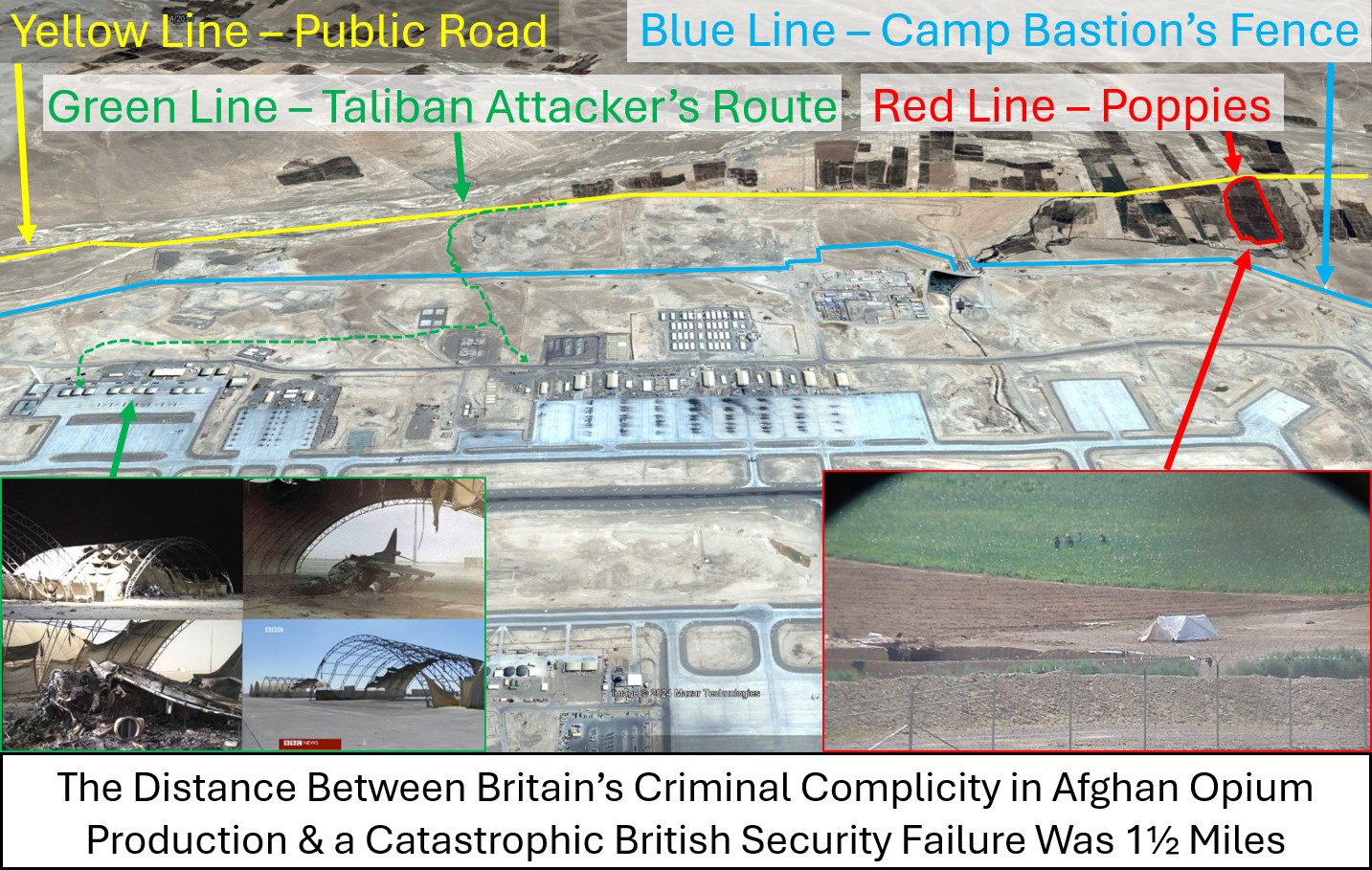
I’ve no doubt about British complicity in Afghan opium production because that was my job on my first guard duty on Camp Bastion’s airfield in April 2012. My guard tower overlooked a valley on the base’s eastern perimeter with a small village and farmers’ fields encroaching on our defences. Our orders were to stop the Afghan security forces from harassing the farmers in the valley, farmers I was now watching harvest opium about 400-meters from our fence line. As if that wasn’t enough, they were cooking the opium in full view of my guard tower and the poppy fields were irrigated by a water source inside Camp Bastion. NATO effluent literally made the poppies bloom! To make matters worse, on exactly the same day I was protecting opium farmers next to our base, 170-British soldiers were sent on a poppy eradication mission 20-km away. They had dutiful BBC journalist Quentin Sommerville embedded with them, to report our ‘poppy eradication’ efforts back home. This all occurred under Richards command.
Work-in-Progress...
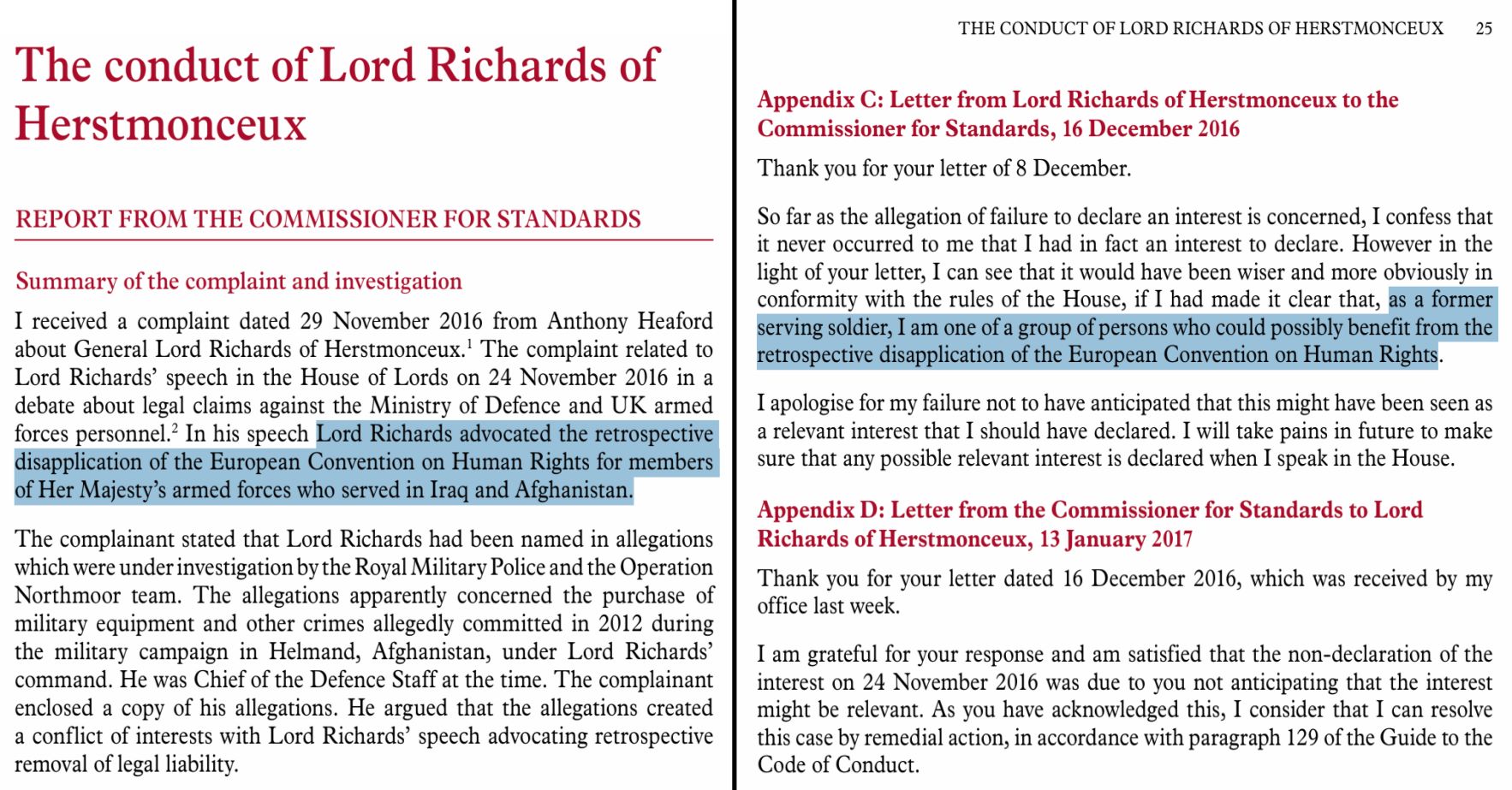
Baron Richards’ life-peerage still got him a well remunerated seat in the House of Lords, a position he abused in 2016 by asking for the retrospective disapplication of ECHR Law to recent British operations in Iraq and Afghanistan. Richards did that without declaring his interest: he commanded some of those operations himself. I reported that abuse of power to the House of Lords Commissioner for Standards and in 2017 Richards was compelled to apologize to the House, admitting his own liability for War Crimes prosecution. Richards admitted that:
“as a former serving soldier, I am one of a group of persons who could possibly benefit
from the retrospective disapplication of the European Convention on Human Rights”
- but submitted the flimsiest of excuses for advocating for ECHR disapplication. Richards, a man who once controlled entire armies, told the Commissioner “I confess that it never occurred to me that I had in fact an interest to declare”, which the Commissioner characterized as a 'minor breach resolved by remedial action’. The remedial action was Richards declaring his interest retrospectively, admitting he’d used his seat in the House of Lords to advocate for discarding laws that he had potentially already broken himself.