"Brigadier Mark Carleton-Smith, who led 16 Air Assault Brigade in Helmand, before the real trouble began said:
“There is not to my mind an insurgency in Helmand. But we can create one if we want to.”
It was a peaceful area, and we created the insurgency by our presence there in 2006. Ministers sleepwalked into the hornets’ nest of Helmand and changed what was a manageable situation in Afghanistan into one that is now unwinnable."
"Indeed, one of my friends was on the recce in 2004 before we went into Helmand. When he got back to England, he went to see a very senior guy at Permanent Joint Headquarters. That very senior general asked him,
“So, what’s the insurgency like in Helmand?”
My friend replied, “Well, there isn’t one, but I can give you one if you want one.”
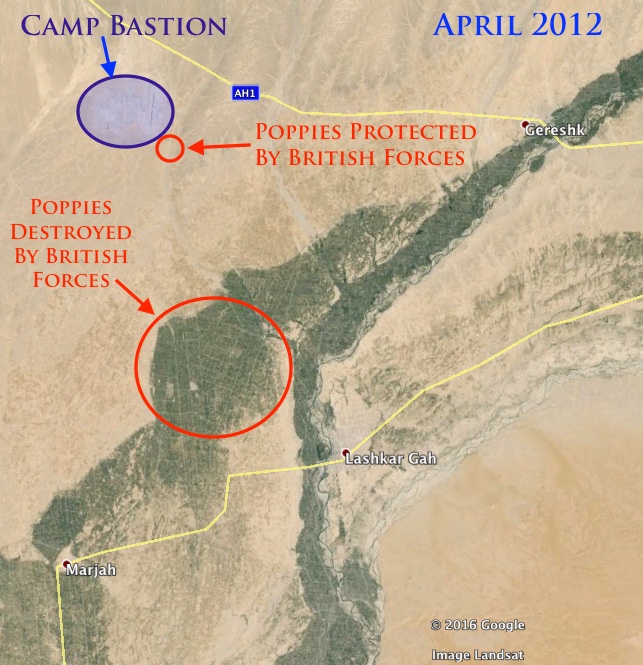
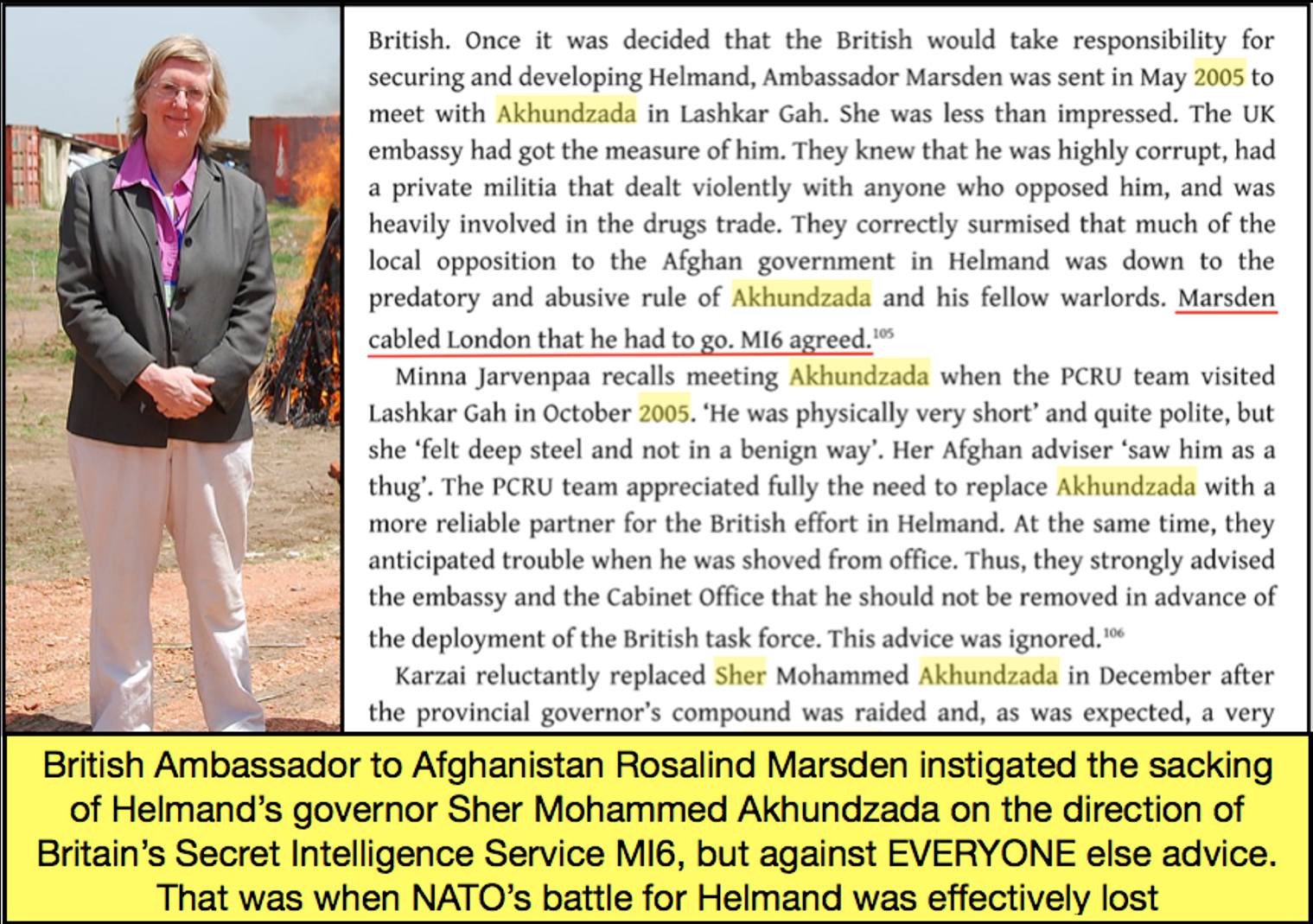
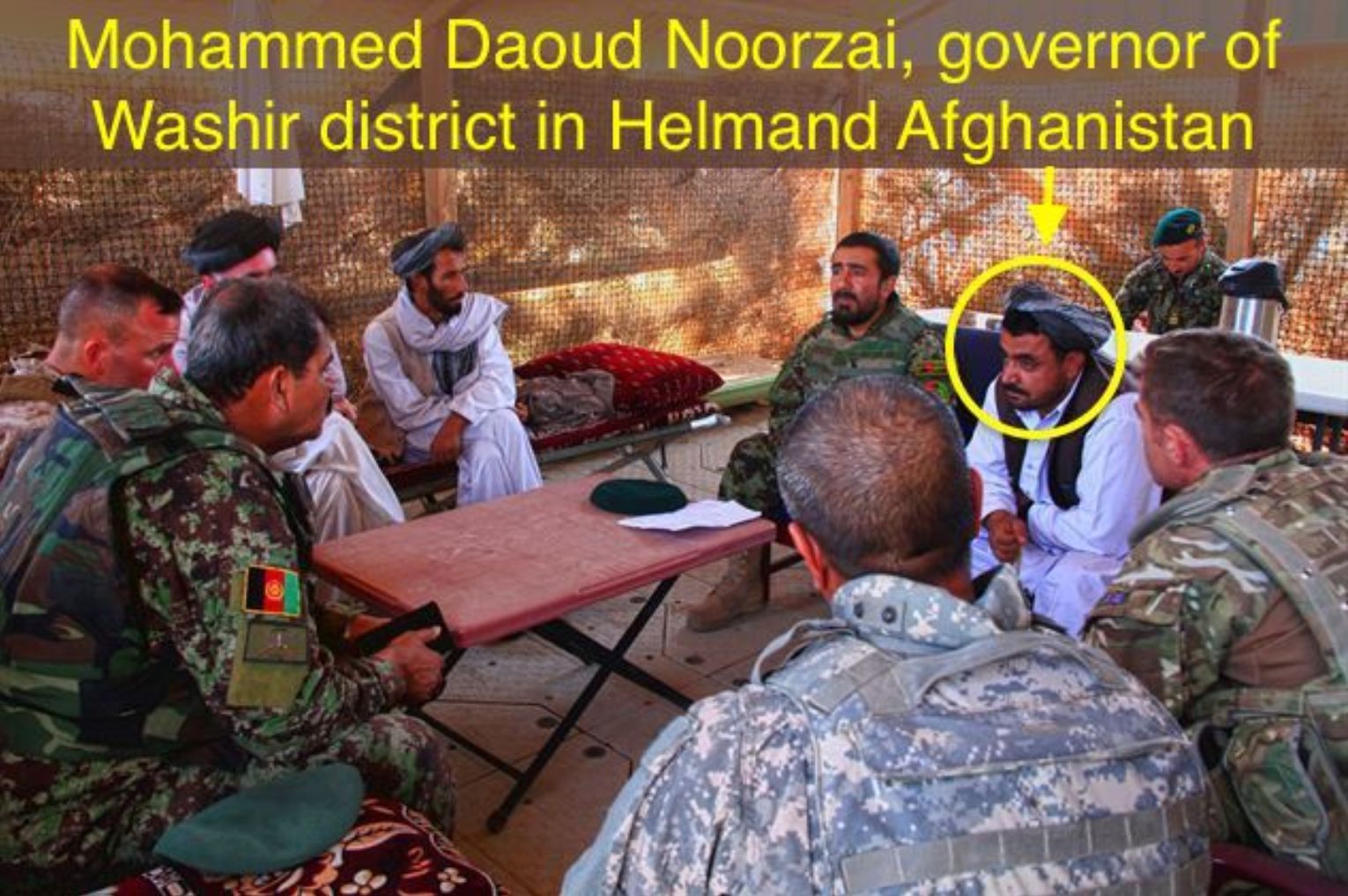
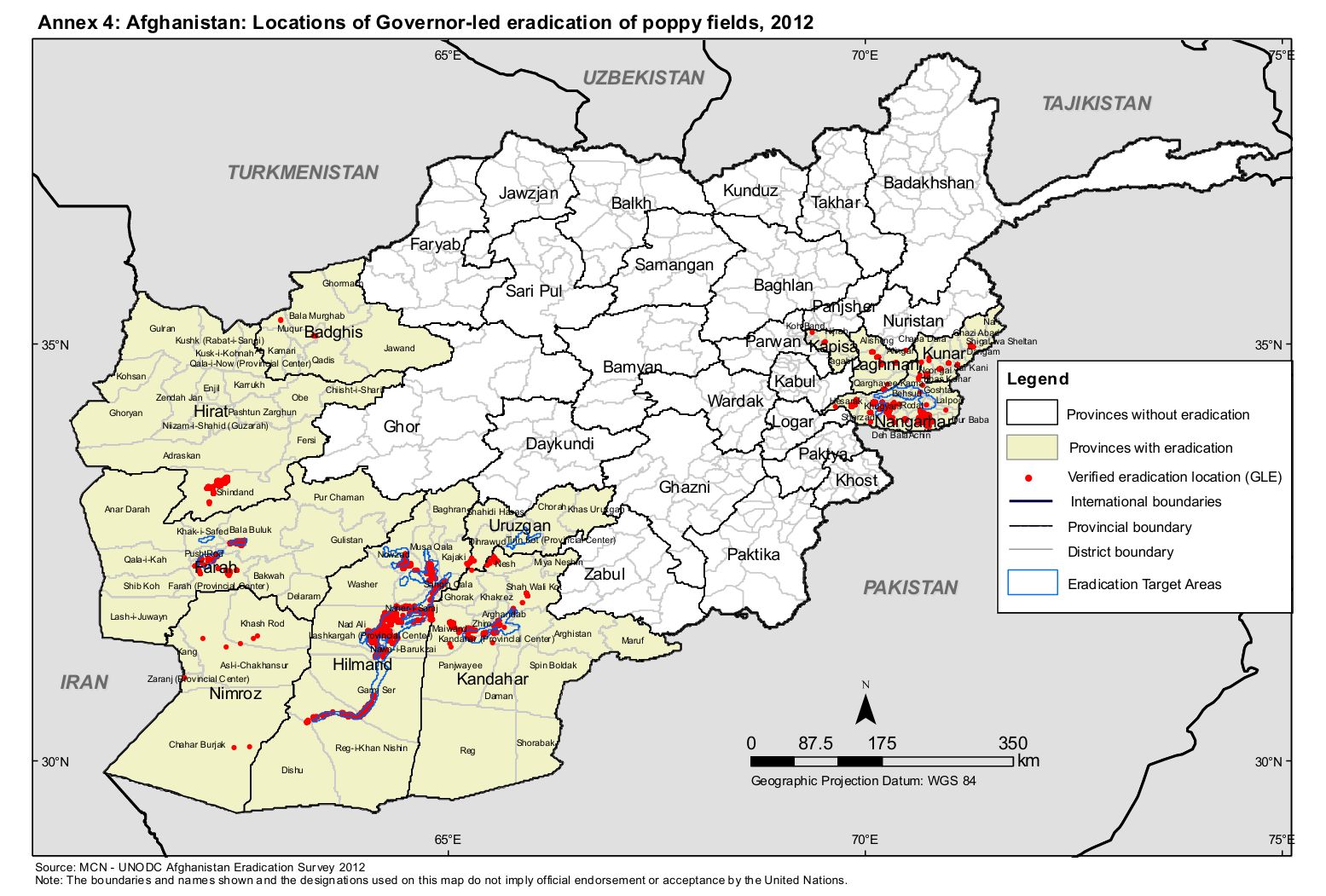
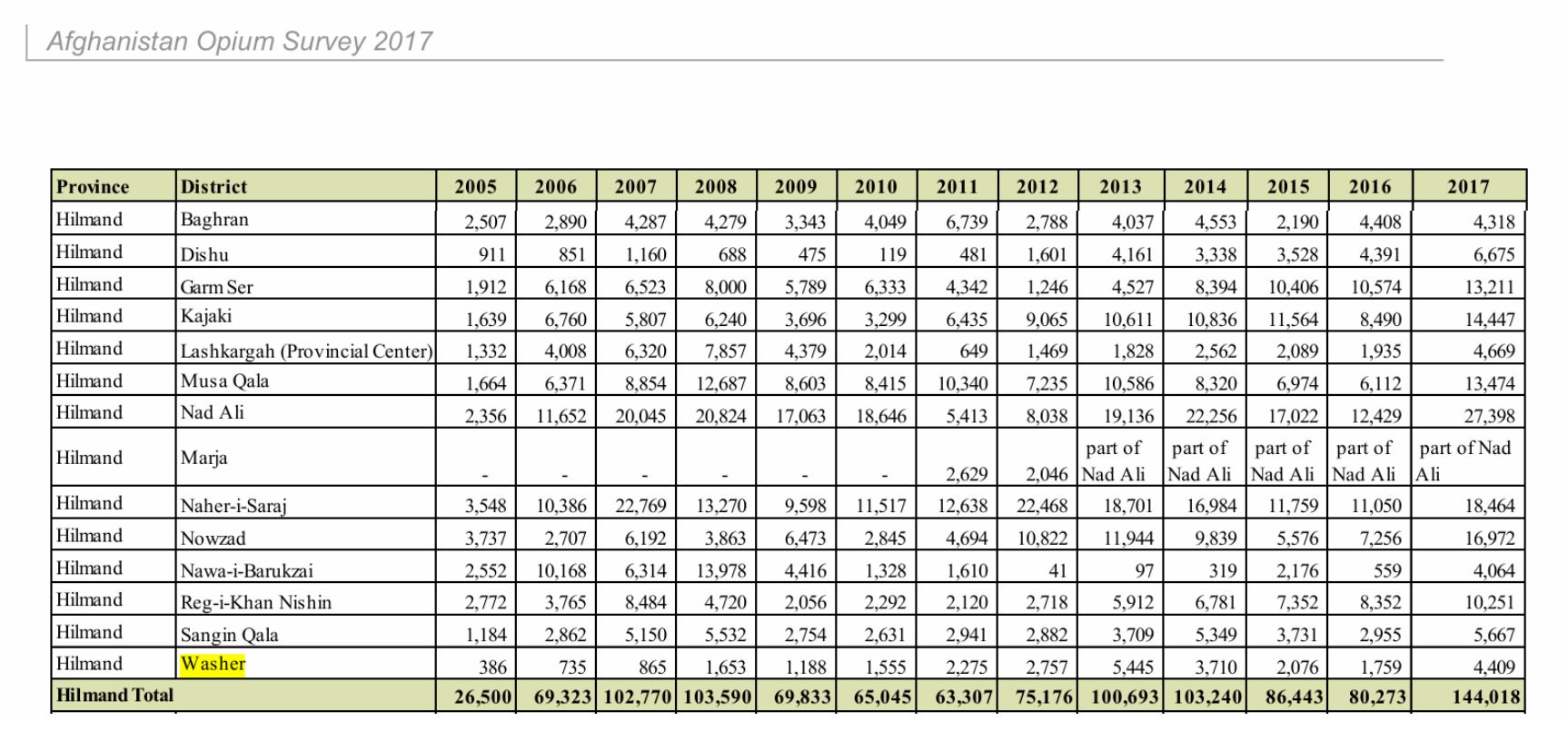
But British Lieutenant General David Capewell contradicted Major General Gurganus when he described allowing the poppy to grow there as a minor tactical error. The question of whether that policy was isolated tactical pragmatism is answered by the charts below that show two things. While Britain’s main operating base was located in Washir district poppy production increased ten fold, and in the same period there appear to have been little to no poppy eradication missions there either. Added to the fact the Noorzai clan of Helmand (that I assume Mohammed Daoud Noorzai is a member of) was highlighted in British army manuals for its major role in the international opium trade, then it appears that Britain really did favour one drug trafficking clan over another, the Noorzais over SMA’s Akhundzadas in this case. Therefore Britain’s complicity in opium production can accurately be described as MI6’s clandestine strategic policy - not so concerned about stopping opium production, just who controlled it.
Foot note: In 2005 US authorities arrested Afghan opium kingpin / occasional CIA asset Bashir Noorzai in a treacherous sting operation, jailing him for life on drug smuggling charges. I don’t know if Bashir Noorzai is related to Mohammed Daoud Noorzai, but it’d raise some fascinating questions if he is.
Part Three: The Consequence of British Complicity in Afghan Opium Production
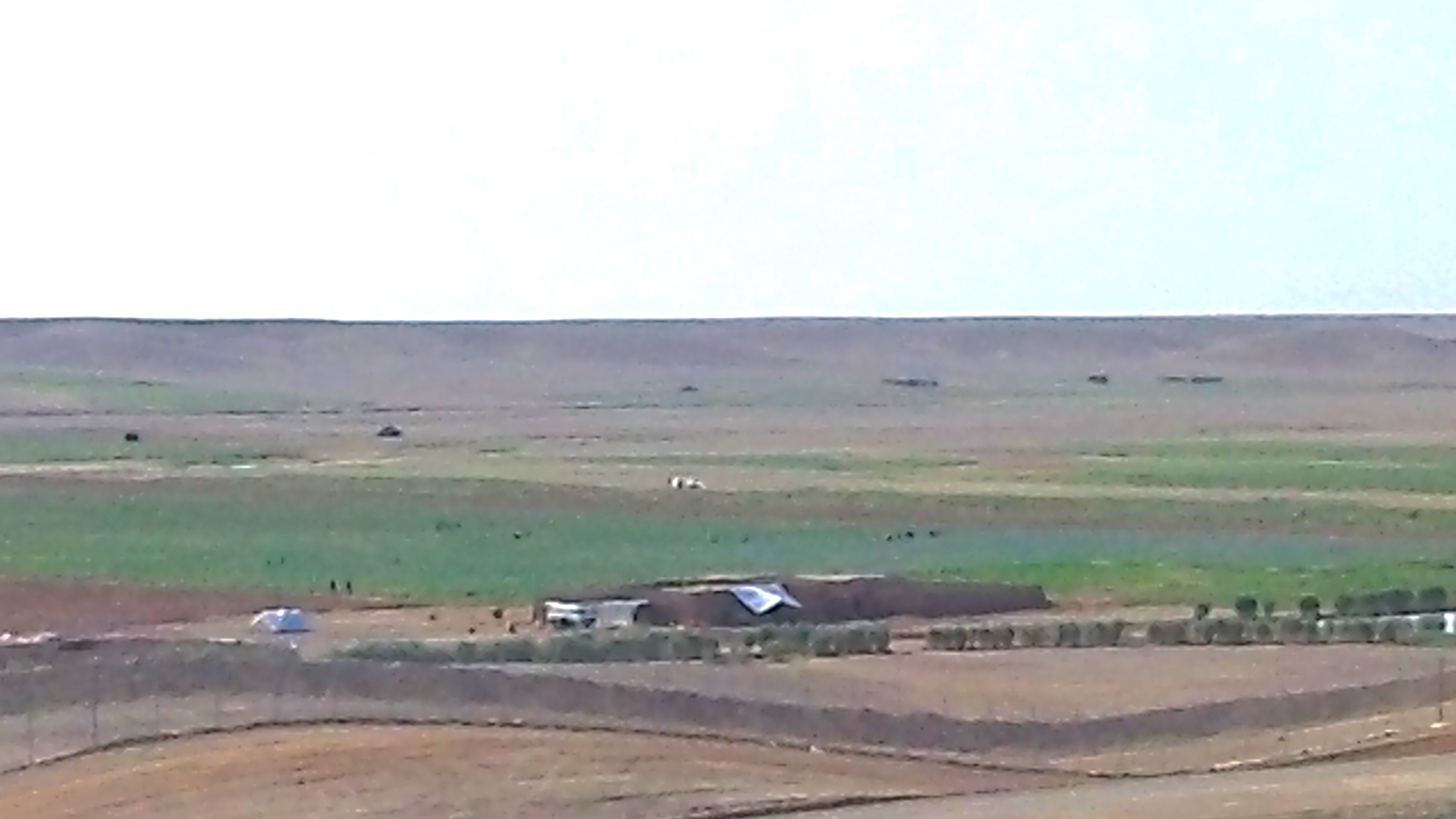
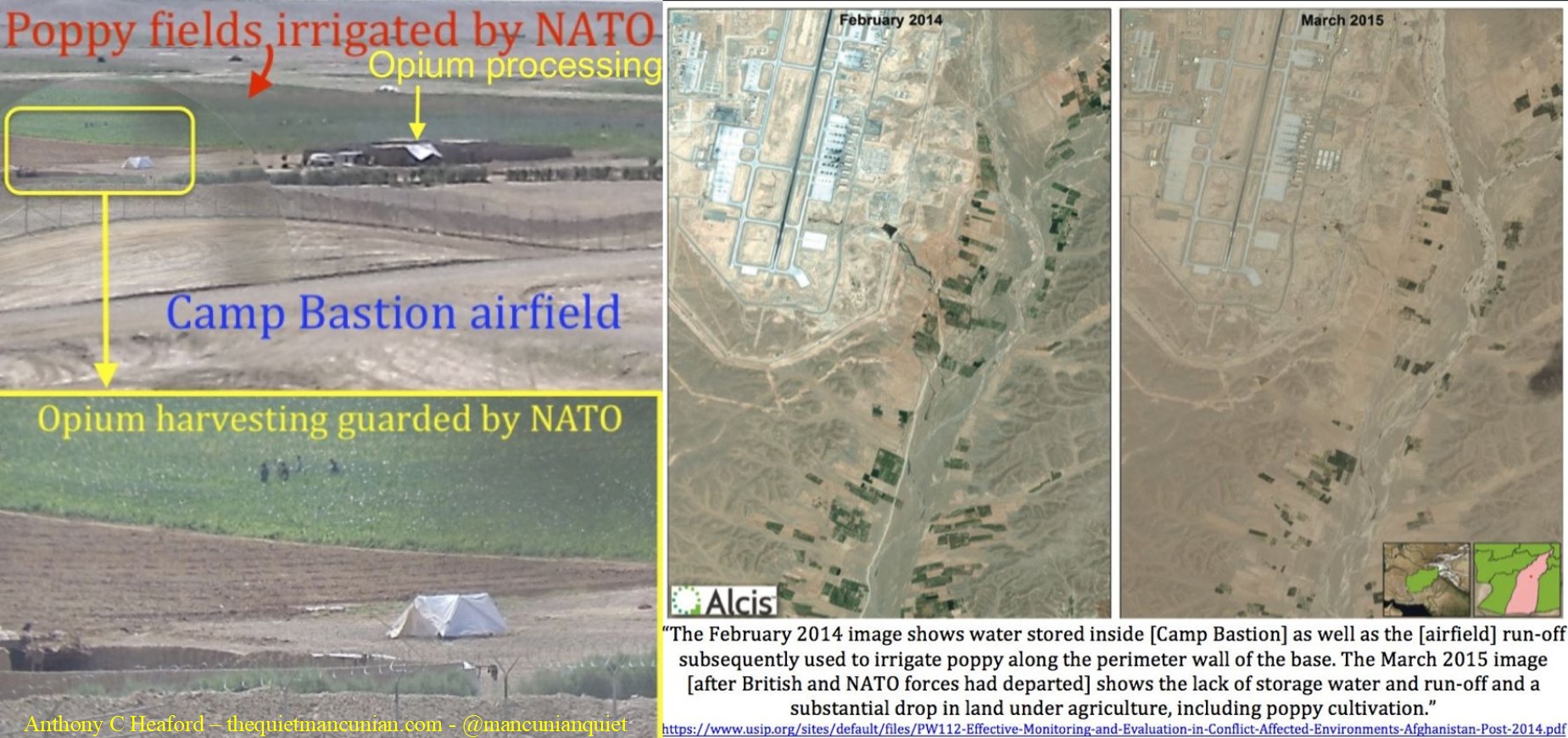
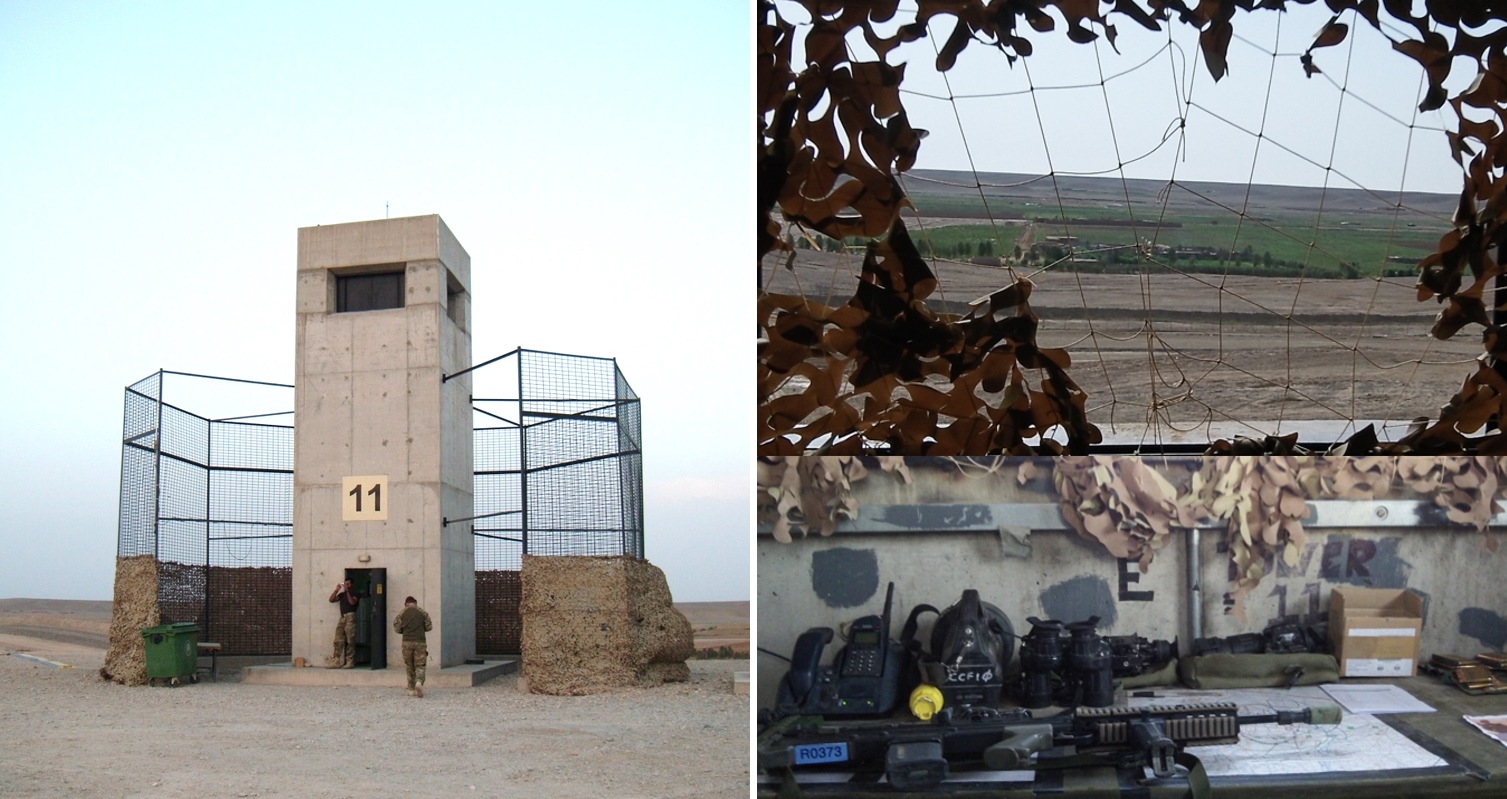
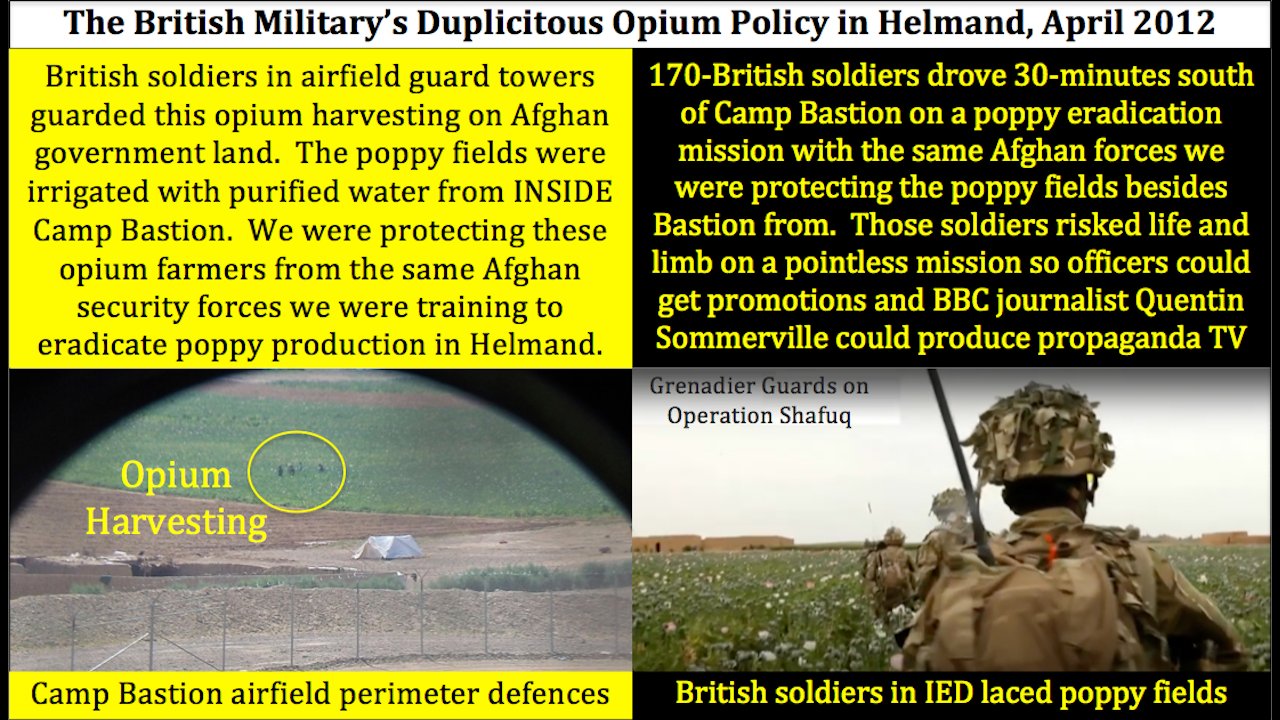
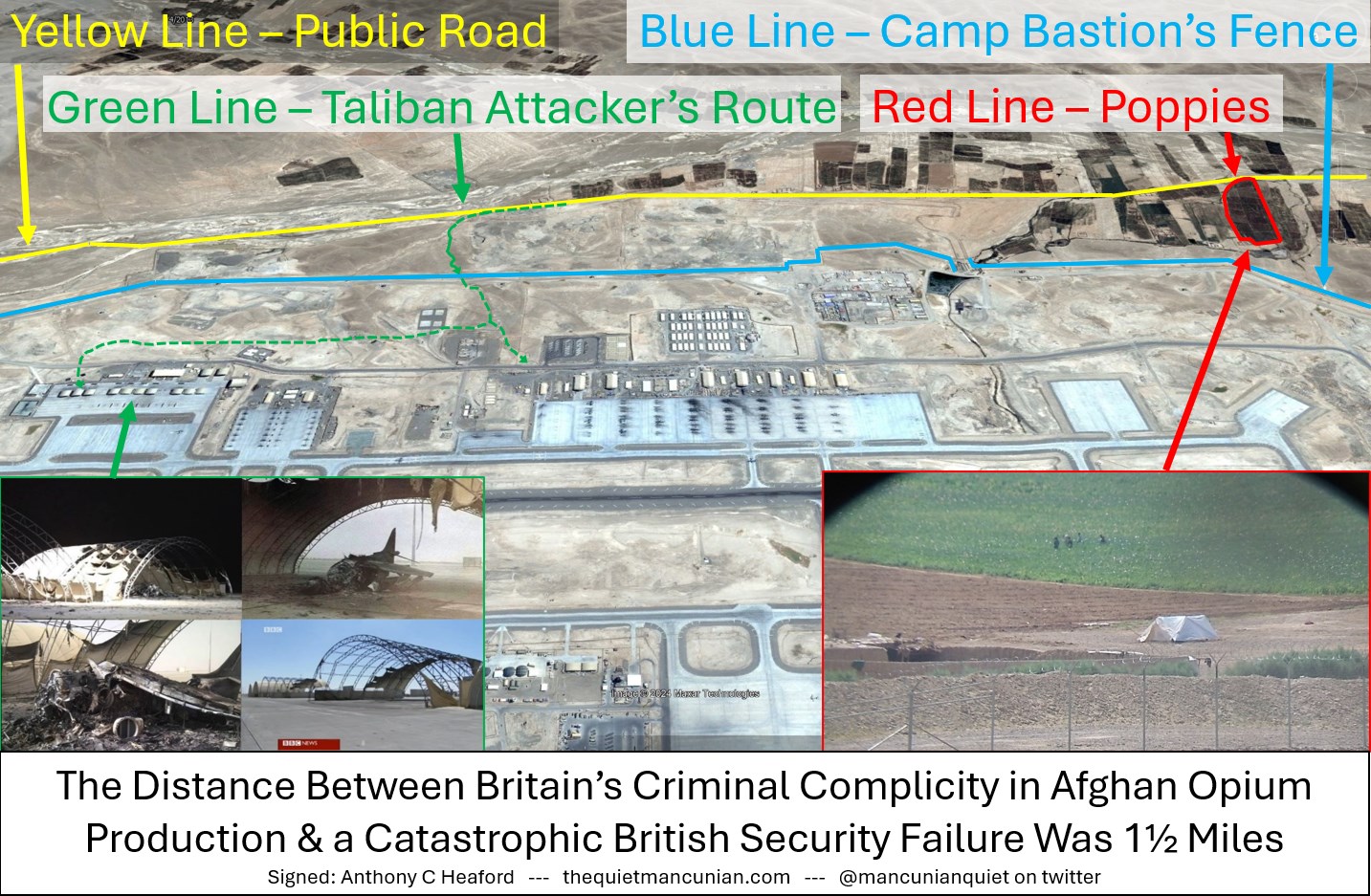
Tactical: From a soldier’s point of view the principle consequence of our complicity in opium production by Camp Bastion was that Taliban allies posing as migrant labourers could spend weeks living just two hundred metres from our base’s perimeter fence, mapping the airfield, noting aircraft movements, guard patterns and the like. That’s confirmed by the British and American generals I’ve quoted above who admit it contributed to the success of the Taliban’s September 2012 airfield raid (that was originally planned for July). Therefore on a tactical level the main cost of Britain’s criminality was borne by the US Marine Corp. They suffered two Marines killed in action while defending the airfield, an entire squadron of their Harrier Jump Jets decimated by Taliban grenades, and a total of $400-million in damage and costs.
Strategic: The Taliban has effectively eradicated opium production in Afghanistan twice, first in 2000 and again in 2022, both times at very little cost and done within a growing season or two. NATO spent twenty years and about $7-Billion on the same project but achieved nothing other than presiding over record levels of opium production – fuelling over 80% of the world’s heroin supply. Strategically NATO made fools of ourselves, for twenty years, our stated mission in tatters. But if the strategy had been to keep the heroin trade and private military contractors busy, it couldn’t have been more successful. Was that MI6's plan when they sacked SMA? Having protected the opium harvest and processing for the British army in 2012 Helmand myself, it wouldn’t surprise me.
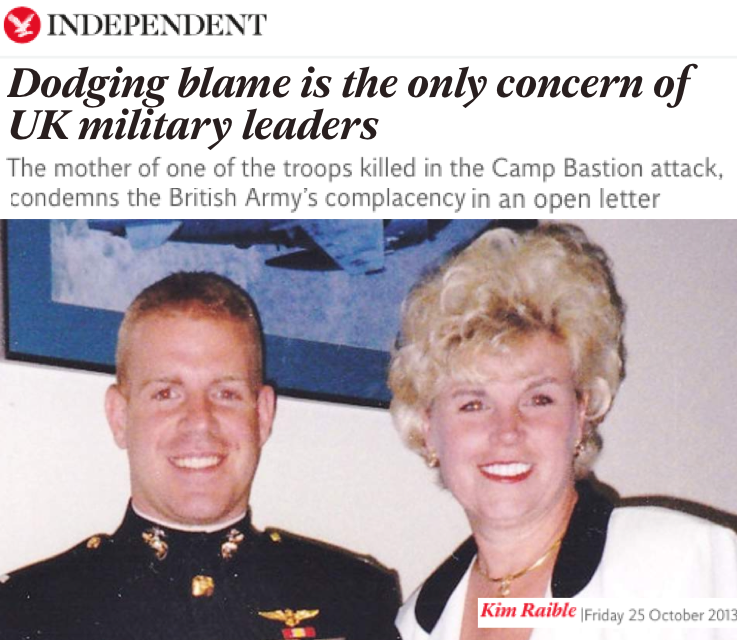
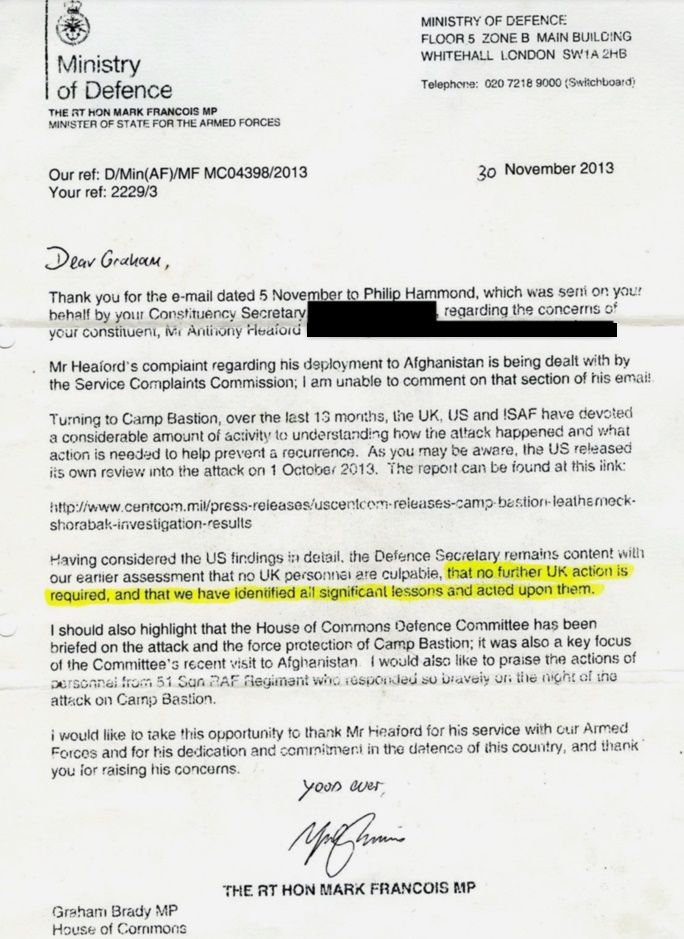
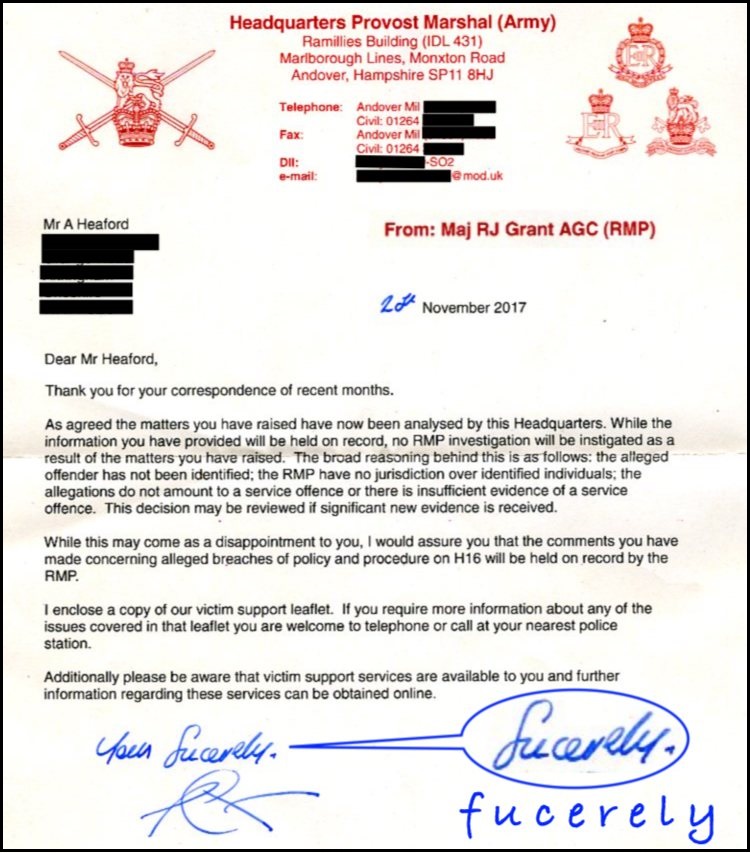
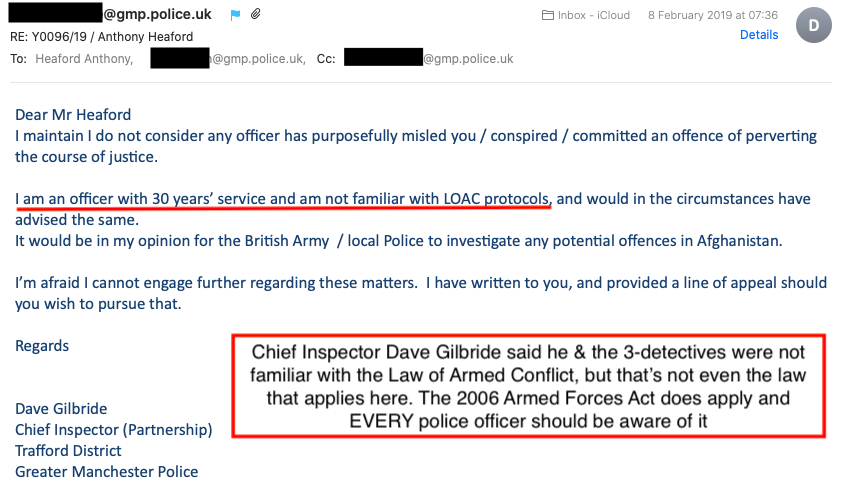
Political: I know of no political or military consequences or accountability for our complicity in Afghan opium production. The British officers who allowed it got medals, tea with the queen and promotions, as did the British officers who allowed it to continue after the Taliban’s 2012 airfield raid. Members of parliament and government ministers refuse to pursue the matter and move on to executive jobs with the war profiteers. Military and civilian police have proved utterly corrupt, refusing to accept the incontrovertible evidence.
2017: Detectives Wilson 14240, Gilbert 14480 & Mills 18806 of Greater Manchester Police
-refused to investigate my evidence by making up the law to avoid enforcing the applicable
2006 Armed Forces Act that states UK laws apply to British forces serving overseas.
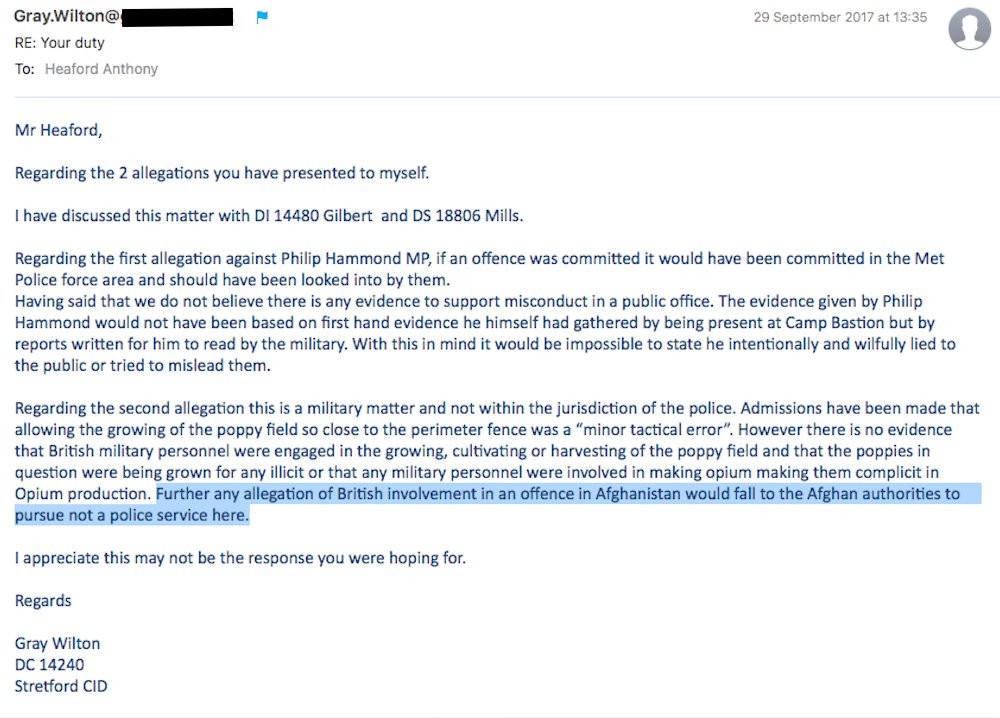
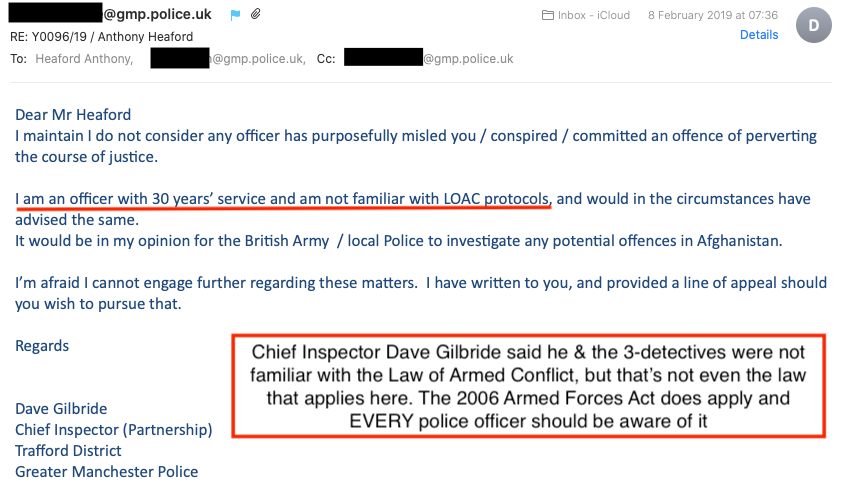
2019: Chief Inspector Dave Gilbride of Greater Manchester Police
- backed three GMP Detectives who made up the law (see above) and also refused to investigate my evidence by referring
to the Law of Armed Conflict rather than the 2006 Armed Forces Act, that does apply and he has a duty to enforce.