Abdul Rasul Sayyaf - 9/11's True Mastermind
by Anthony C Heaford --- @mancunianquiet on twitter --- Work-in-Progress 7 June 2026
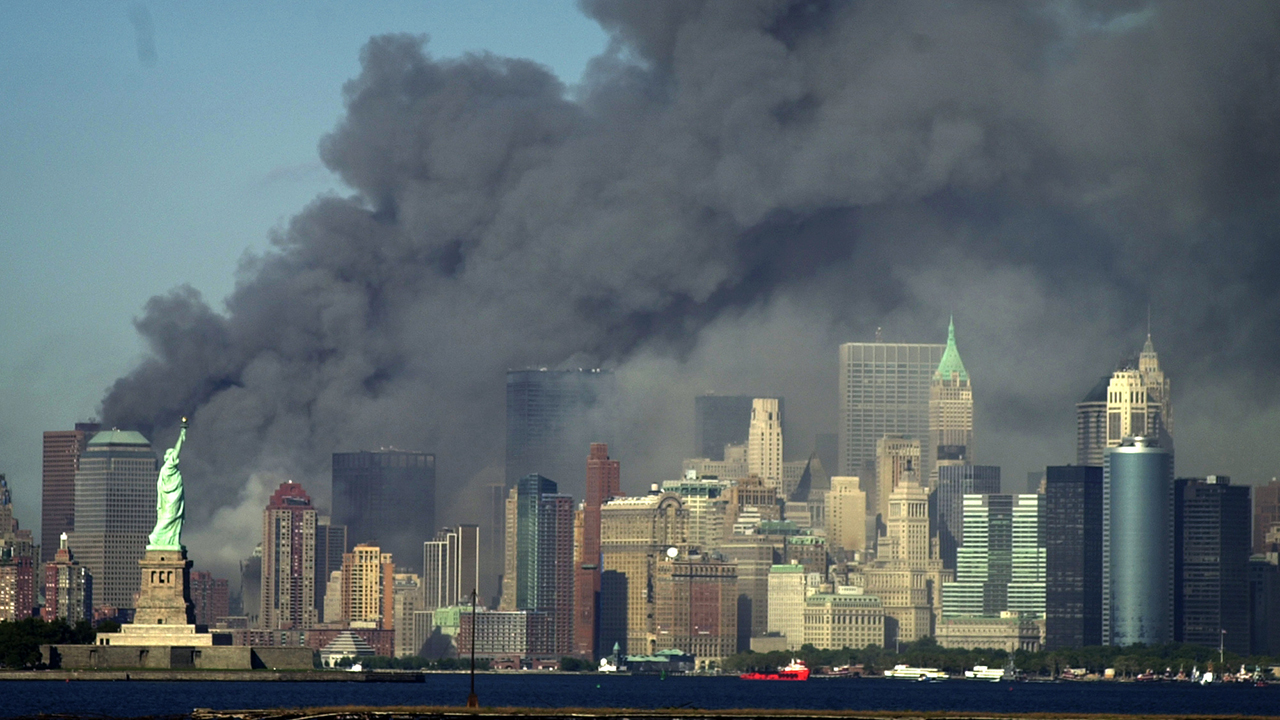
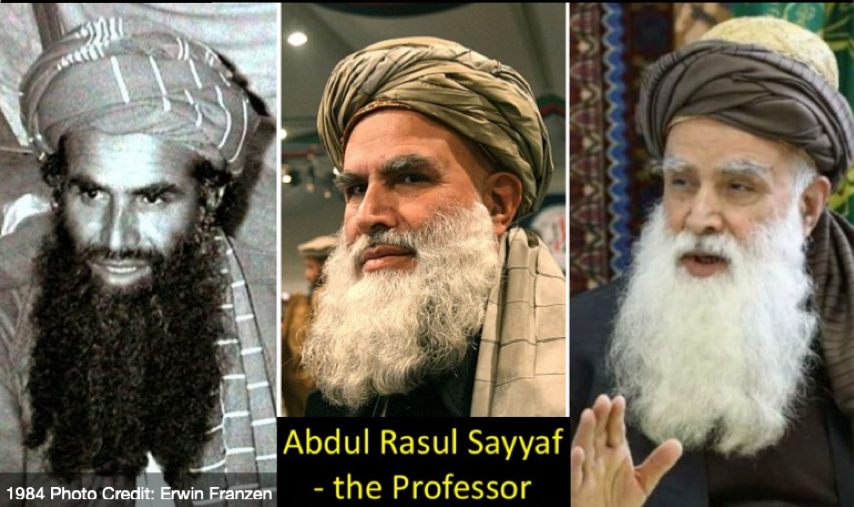
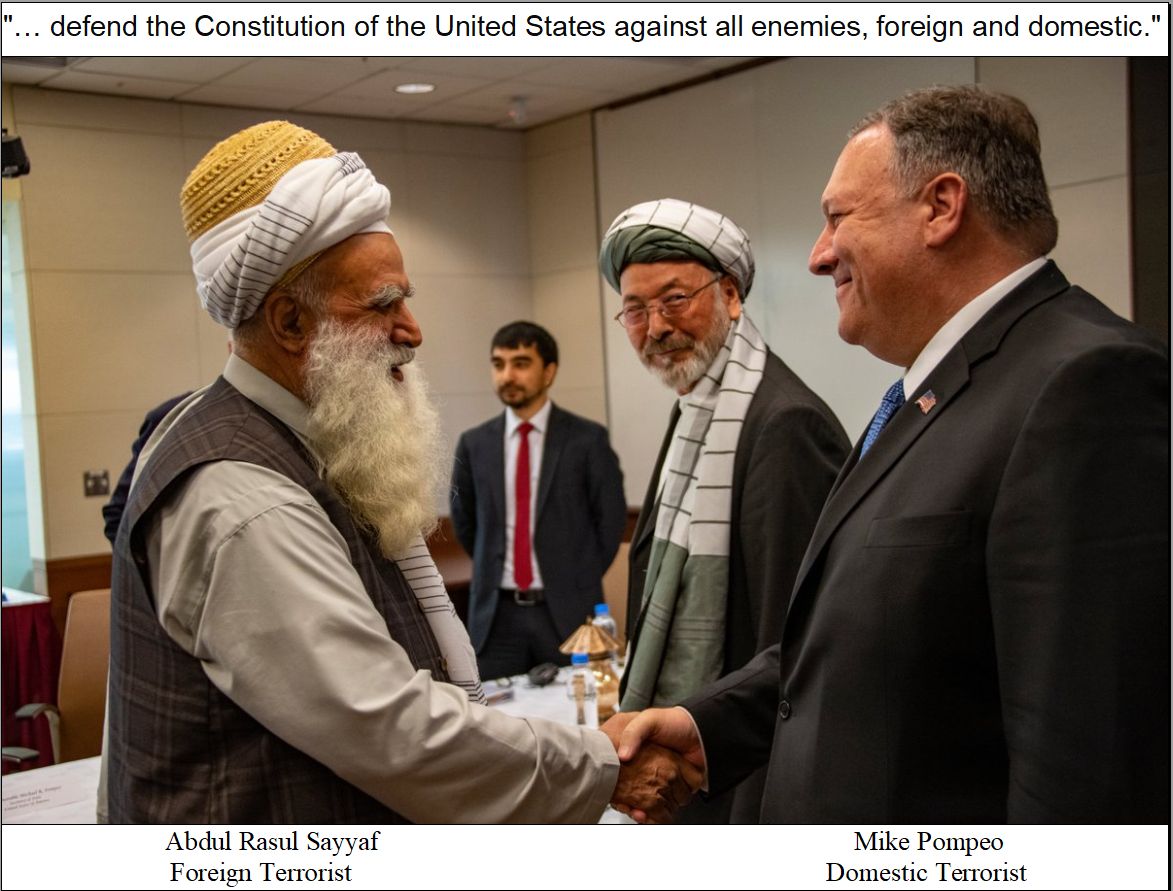
Afghan Mujahideen leader Abdul Rasul Sayyaf is the Saudi backed fundamentalist Wahhabi Islamic Law Professor who employed, trained, mentored and financed a host of global terrorist entities. They included the 1993 World Trade Center bomber Ramzi Yousef and his uncle Khalid Sheikh Mohammed. Most of the 2002 Bali bombers trained in Sayyaf’s camps too, as did the founder of the Filipino Abu Sayyaf Group which was named in Sayyaf’s honour. But Sayyaf was still put on America’s payroll by CIA officer Gary Schroen in October 2001 (while the WTC in New York was still burning) and became a 'strongly supported' NATO ally during our occupation of Afghanistan. This report presents the evidence for those claims and my assertion that Sayyaf was the true Mastermind behind both attacks on the WTC, the 1998 US embassy bombings, the Bojinka plot, the Bali bombs and more. The adjacent photo shows US Secretary of State Mike Pompeo shaking hands with Sayyaf in 2019 Kabul.
According to the 2004 9/11 Commission report (page 146/147):
“KSM plunged into the anti-Soviet Afghan jihad soon after graduating from college. Visiting Pakistan for the first time in early 1987, he traveled to Peshawar, where his brother Zahid introduced him to the famous Afghan mujahid Abdul Rasul Sayyaf, head of the Islamic Union Party. Sayyaf became KSM’s mentor and provided KSM with military training at Sayyaf’s Sada camp… Between 1988 and 1992, KSM helped run a nongovernmental organization [Maktab al-Khadamat] in Peshawar and Jalalabad; sponsored by Sayyaf, it was designed to aid young Afghan mujahideen.”
That quotation proves KSM had intimate links to Sayyaf from the very start of his militant career (1987). It also tells us when KSM built his global terrorist network, during the four years he worked for Sayyaf managing the foreign volunteers who arrived at the Maktab al-Khadamat (aka the Peshawar Services Office). That would not have been a surprise to the CIA as they already knew about Sayyaf's activities, as per this now declassified 1985 assessment:
“Sayyaf has used his role as principal conduit of Arab money to the jihad (holy war) to build his own insurgent organization, in competition with and at the expense of other resistance leaders. They, in turn, accuse him of corruption and misuse of funds, resent his position as the Arabs’ 'fair-haired' boy, and have increasingly refused to cooperate with him.”
The timing of KSM’s entry into Sayyaf’s insurgent organization is critical: 1987 marked the effective end of the Afghan Jihad after the Soviet occupiers announced their withdrawal under a ceasefire respected by most but not all Mujahideen factions. And KSM’s management of the Peshawar Services Office on Sayyaf’s behalf coincided with Osama bin Laden’s split from that same office. That falling-out is noted in the minutes of the August 1988 meeting chaired by OBL (the Sheikh) in Peshawar:
“Mismanagement & bad treatment in Maktab al-Khadamat.
Why is the Arab element being secluded? ...disagreement is present
…the Sheikh's military gang has ended. ”
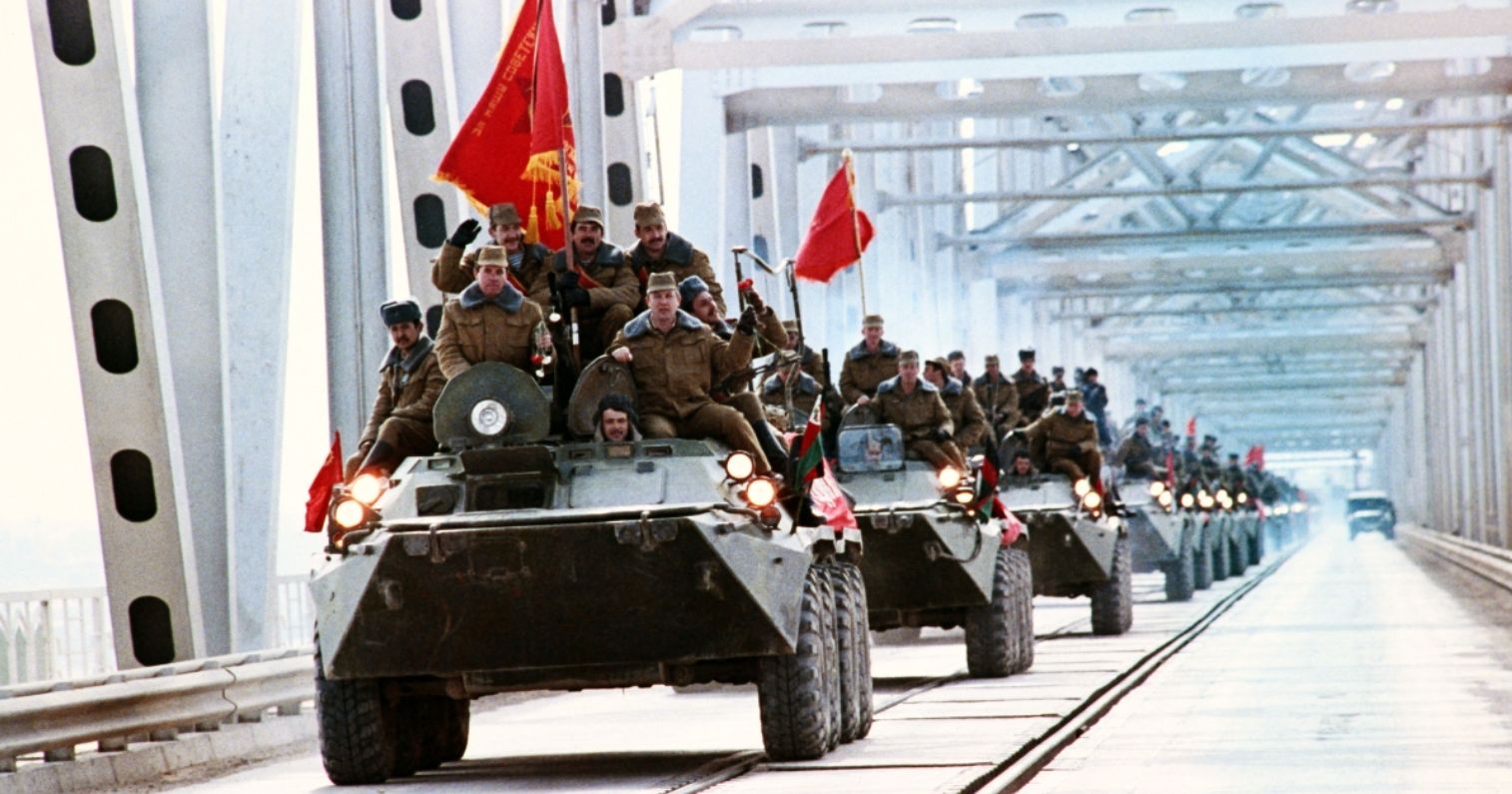
The Afghan Jihad ended on 15 February 1989 when the USSR withdrew its last troops – the Jihad’s goal complete. The fighting that followed was a civil war, Afghan against Afghan, and that’s why Osama bin Laden left within a couple of weeks. He clearly wanted no part in it, even taking all his construction machinery back with him. Perhaps that was the cause of tension at the Maktab al-Khadamat; it certainly demonstrates a parting of ways from those who continued to fight, specifically Sayyaf and KSM.
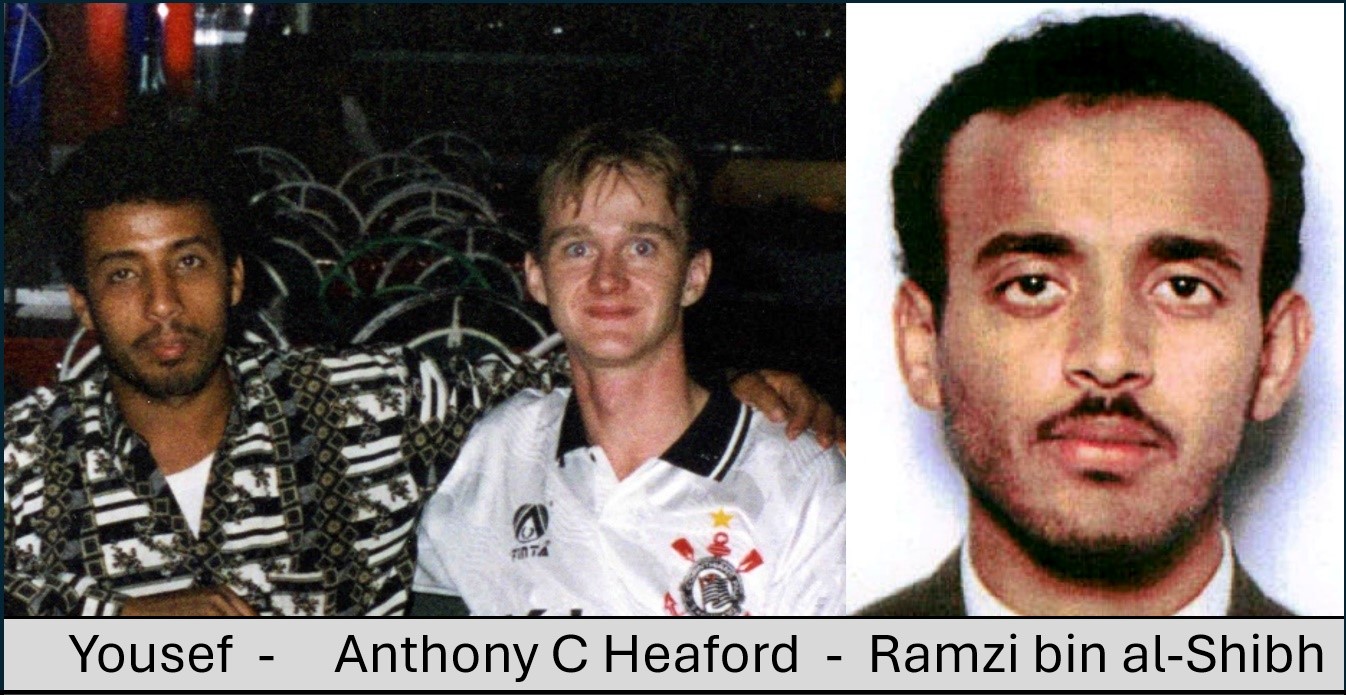
The  9/11 Commission report (page 150/151) details how Indonesia’s Jamaah Islamiyah ( JI) leader Hambali (the 2002 Bali bomber) became one of Sayyaf’s first recruits in 1986. He trained in Sayyaf’s Sada camp near Peshawar Pakistan where KSM trained too. But Sayyaf’s big recruitment drive occurred after the Soviet withdrawal. KSM’s brother had introduced him to Sayyaf in 1987 and in turn KSM introduced their nephew Ramzi Yousef to Sayyaf’s insurgent organization in 1990, amongst many other recruits via the Peshawar Services Office. Yousef was studying electronic engineering in Britain and used those skills to learn bomb making in Afghanistan, at Camp Khaldan where Abu Sayyaf and JI leadership trained too. A  2005 US Department of Justice funded report (page 47) states:
“In late 1990, Yousef went to Afghanistan for training at Camp Khaldan, where he learned basic bomb building... In the summer of 1991, Yousef traveled to the Philippines where he conducted explosives training for the terrorist group Abu Sayyaf. In 1992, he returned to Camp Khaldan and began teaching a course in explosives.”
And a  2008 US Department of Justice published report (page 5) reports that Filipino and Indonesian recruits to Abu Sayyaf and JI were sent to Sayyaf’s Sada camp near Peshawar in 1991 (including Hambali’s accomplices in the 2002 Bali bombings):
“Patek and Mugasid were in the same intake at the Jamaah Islamiyah military academy in Sada, Pakistan, on the Afghan border, in 1991. Other members of that class were Bali bombers Imam Samudra, Ali Imron and Sarjiyo”
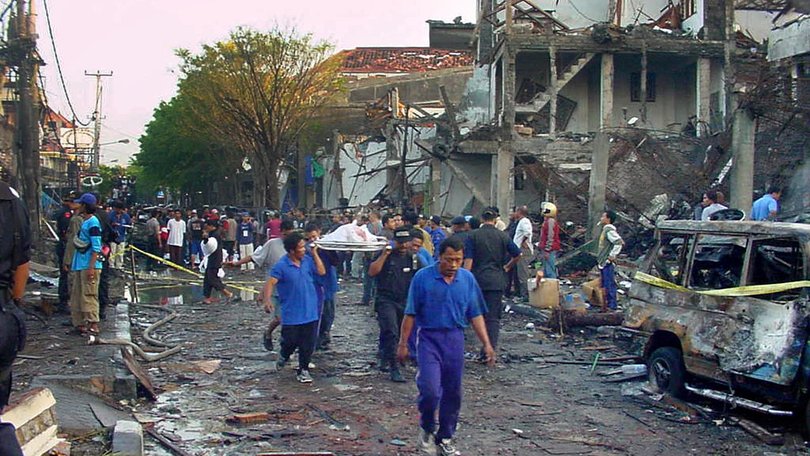
Insurgents trained. Regional groups established. Generous Arab financing. By 1992 everything was in place for Sayyaf’s insurgent organization to begin its terrorist spree. The first evidence of that was a money transfer on 3 November 1992, when KSM sent $660 from Qatar (where the ruling al-Thani family was his new host, employer and protector) to Ramzi Yousef’s 1993 World Trade Center bomb group in New York (that was already infiltrated by the FBI but still left free to operate). That first attack, an attempt to murder 250,000 Americans because of their government’s support for Israel, was carried out by Abdul Rasul Sayyaf’s alumni, not Osama bin Laden’s followers. And it wouldn't have happened if the FBI had listened to its informant's warnings, Egyptian army officer Emad Salem. That massive Intel agency failure(?) is significant because it was repeated time and time again. It appears Sayyaf's insurgent organization was very deliberately left free to operate. There was an arrest within days of the attack but only because one of the bombers tried to get a deposit back from the rental agency whose van they'd just blown up. The group claimed responsibility under the name of The Liberation Army Fifth Battalion, sounding like something from a Steven Spielberg movie. It was the Middle East they wanted to liberate from American dominance. Their methods were murderous but, to their minds, so was Western interference in the Middle East since World War One.
While his international forces were bombing Manhatten in February 1993, Sayyaf's militia in Kabul were committing one of the worst massacres in the forty years of conflict that Afghanistan suffered. Sayyaf's Wahhabi fighters raped and butchered their way through the Shia Hazara district - a tactic typical of Daesh today. Despite being Pashtun Sayyaf sided with the Northern Alliance against the Taliban. Very craftily he offered Osama bin Laden sanctuary in 1996 when OBL was forced to leave Sudan but then passed OBL over to the Taliban's responsibility. Maybe it was an act of revenge for OBL's swift departure in 1989. And perhaps it was Sayyaf shaping the battlefield, setting-up OBL and the Taliban to take the blame for Sayyaf's insurgent organization terrorist spree. Coincidentally... Western Intel agencies / the Deep State had been trying to do exactly the same thing since at least 30 May 1993 when they planted a fake report with the French AFP news agency. It contained the first mention of Al Kaida in the international news. It claimed a Jordanian militant had told them about the secret organization training in Afghanistan that was financed by Ossama ibn Laden.
If I am right about Al Qaeda being a western invention, where did they get the name from? From Al Qaidah town in Yemen, where OBL had resettled his followers in 1989. How do I know? I’ve been there, on 26 September 1997 for a recruitment interview with KSM’s terrorist cell. That's why I feel qualified to give my opinion despite it contradicting every single intelligence agency, media outlet and academic who has ever given an opinion on 9/11 or Al Qaidah (correct spelling).
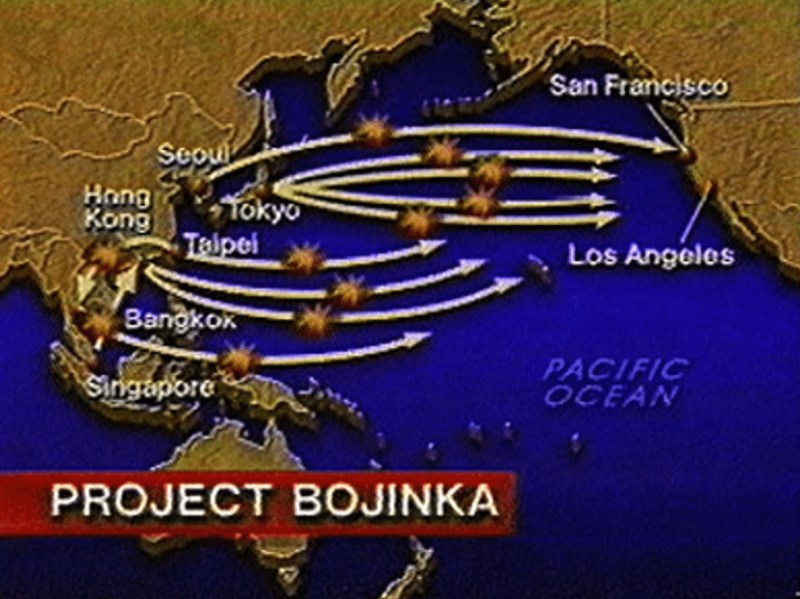
By 1994 Ramzi Yousef returned to the Philippines where he’d taught the Abu Sayyaf Group (ASG) bomb making in 1991. He settled in Manila with a small terrorist cell and began planning the Bojinka Plot, a plan to plant sophisticated timed-bombs on multiple trans-Pacific passenger planes. We know the group was already infiltrated by the FBI using Egyptian army officer Emad Salem and that one member had been arrested after the 1993 WTC bombing, so clearly their Operational Security (Op Sec) was appalling. That’s further demonstrated by my belief that I saw Yousef, KSM and others in early 1994 in Manila. I was backpacking in the Philippines from January to April 1994 and one evening noticed a group of smart-casual attired south Asian men walking in front of us. They stood out from the locals and the Caucasian backpackers enough for me to watch them as they entered the Hobbit House restaurant, very close to the café front pictured right. 1994 Manila was where KSM's nephew Ramzi Yousef first spoke of using a hijacked civilian airliner as a kamikaze guided missile to attack targets in the USA, as detailed here.
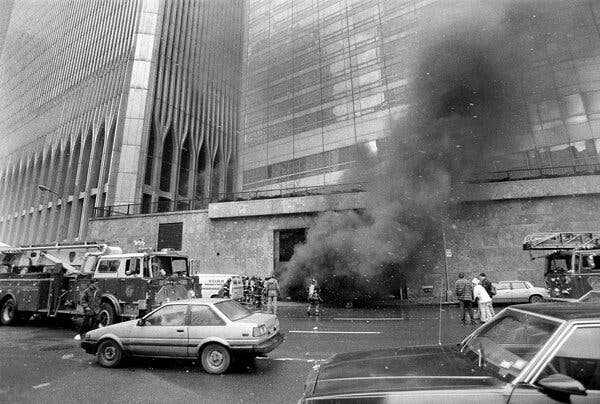
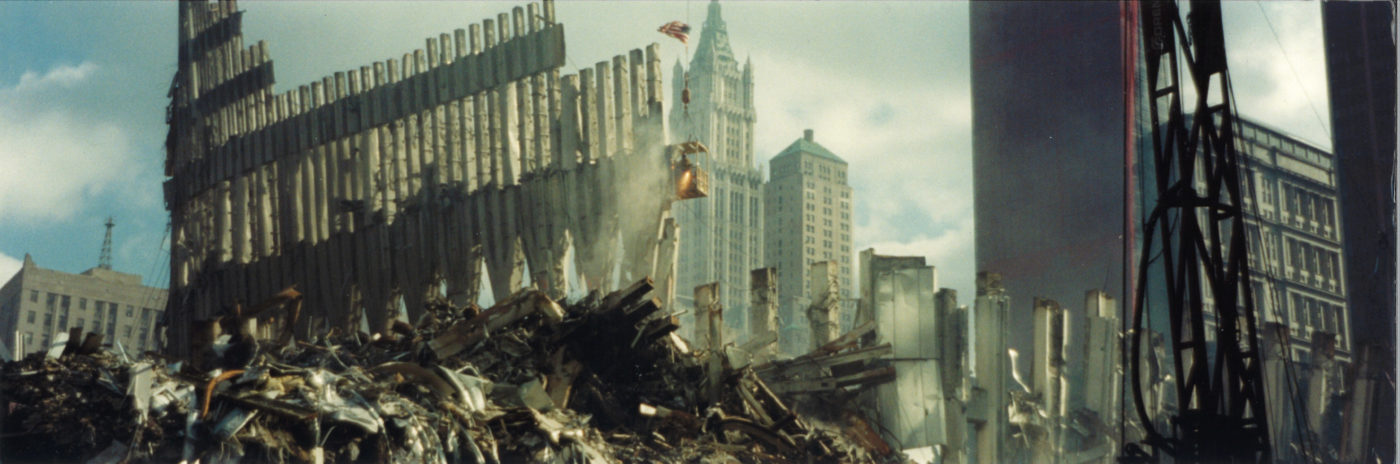
Sayyaf's work in 1993 Manhatten
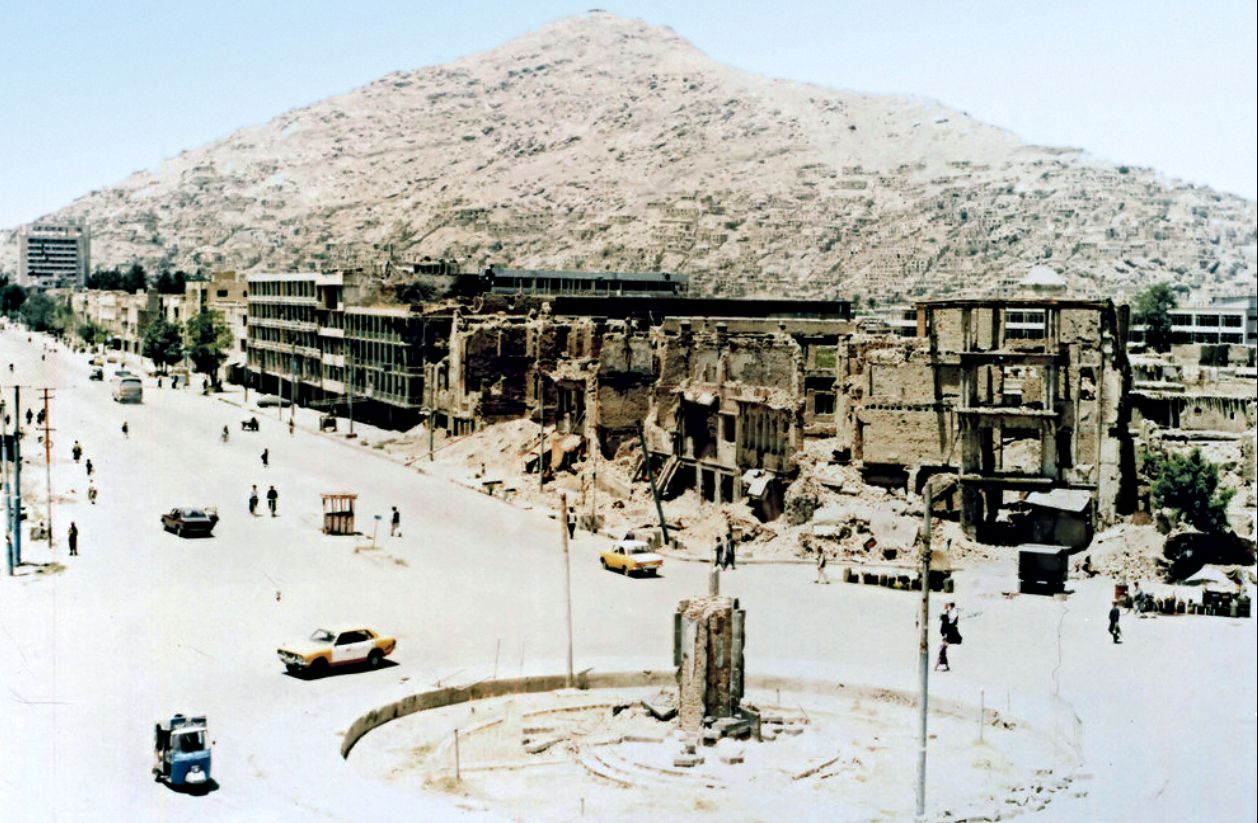
Sayyaf's work in 1993 Kabul
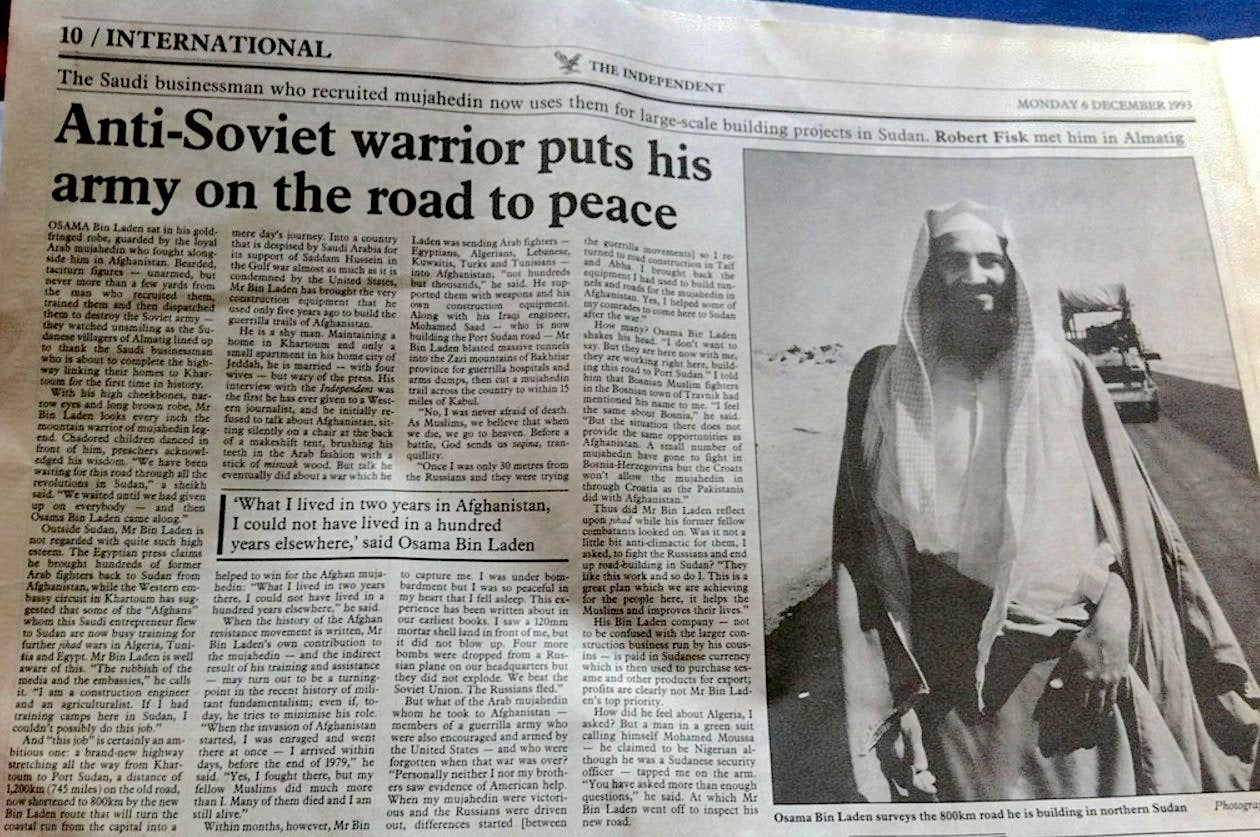
30 May 1993: Al Ka'ida is 'invented'
A cafe front in 1994 Manila
The Manila Cell was able to explode three bombs (the first a test, the second targeted a cinema and the last on board Philippine Airlines Flight 434 which killed a Japanese business man) before their apartment was raided in February 1995, after a supposedly accidental fire while they were out. I suspect the cell was under surveillance the whole time and that the supposed fire was setup by those monitoring them. There was an arrest but again it was due to the cell’s appalling Op Sec rather than detection – one of them had tried to recover a laptop from the apartment while the police were still there!
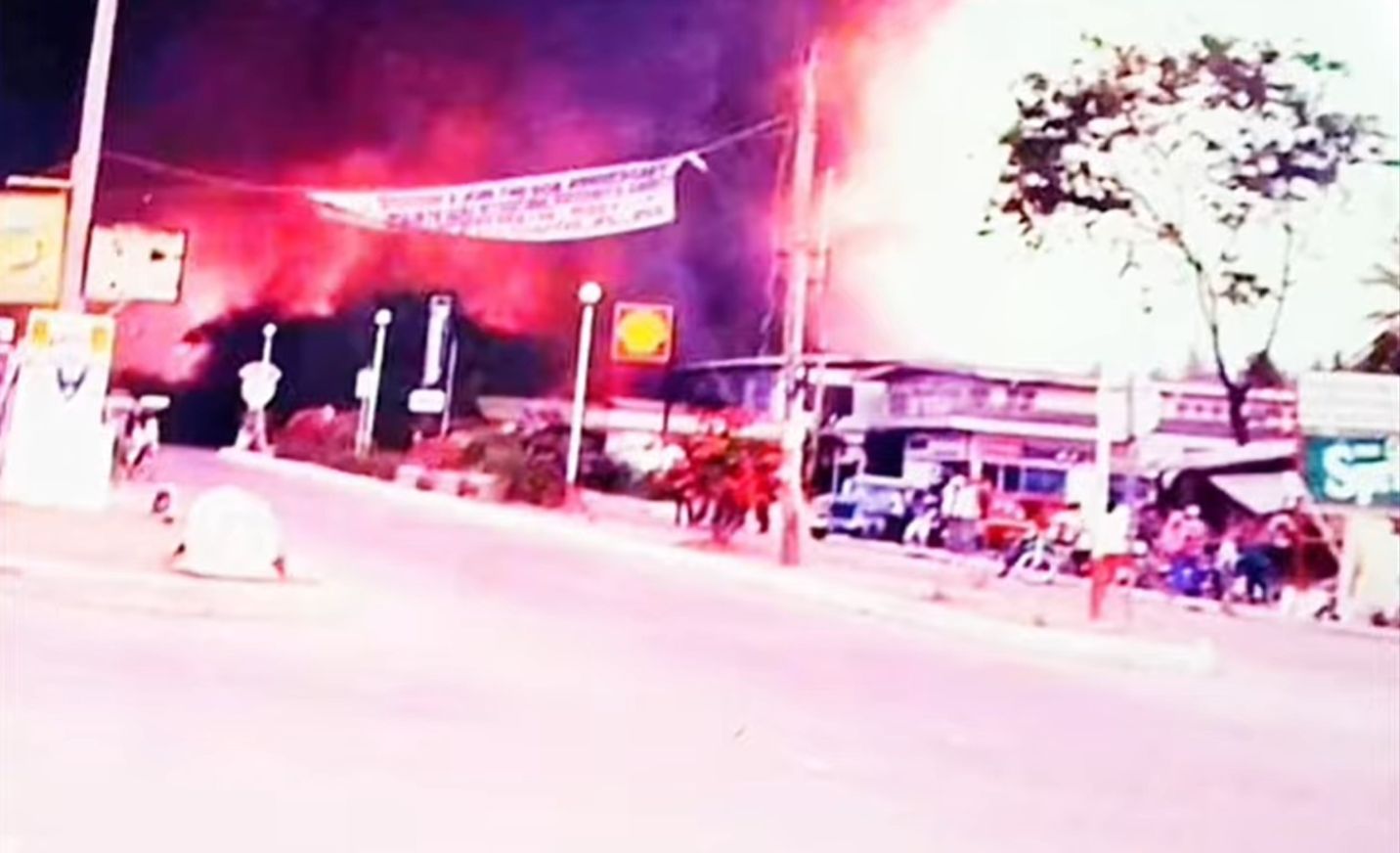
The Manila Cell already had intimate links to the Filipino ASG through Abdul Rasul Sayyaf and two months after the Manila Cell was busted the ASG conducted it largest attack ever. On 4 April 1995 they raided the remote southern Philippines town of Ipil. Robbing banks and firing indiscriminately they murdered fifty-three and took about thirty hostages. That was one of Abdul Rasul Sayyaf’s insurgent organization’s regional groups, ASG, exacting a reprisal for the busting of Sayyaf’s international group that was led by their mutual friend Ramzi Yousef. There was a bin Laden link in the Philippines too – Osama’s brother-in-law Jamal Khalifa had lived there since 1987.
Saudi national Khalifa had been the principle financer of ASG, a conduit for the Arab funding that was paid via Abdul Rasul Sayyaf (as per the 1985 CIA assessment). There’s massive 9/11 links to the Philippines too: witnesses saw hijacker / pilot Mohammed Atta there in 1999, being collected from his hotel by an employee of Angeles City Flying Club – retired US Air Force Master Sergeant Melvin Troth. Atta and others who frequented Angeles city were supported by someone witnesses identified as Samir, a Tagalog speaking Jordanian businessman and owner of a Manila travel agency. Then there's Dave Dean, my old workmate who ran a go-go bar servicing US Air Force personnel in 1970s Angeles city. And in another wild link, when I was busted in 1994 Manila for smoking a joint Dave Dean later told me he still had good enough contacts in Manila to have sorted it with one telephone call. I'd managed to settle the matter myself but it shows Dean still had incredibly powerful contacts in 1990s Manila which leads me to my next question - who owned the Manila cafe with an airplane sticking out of its front as though it had crashed there? It would've been foolish for Samir or Khalifa to have done it which leaves Dean and Troth as two likely candidates. My suspicion is they were planting an idea somewhere they knew Sayyaf's insurgent organization (the 1993 WTC bomb group) was operating.
Ramzi Yousef was arrested in Pakistan a few weeks later but again it was nothing to do with detection; one of Yousef's associates betrayed him in order to collect an advertised reward. KSM would remain safe in his Qatari sanctuary for another ten months. He was indicted for the 1993 WTC bomb in December 1995 but was warned by his Qatari hosts before the USA could arrest him. When I met KSM in September 1997 Yemen it was on a business trip setup by Dave Dean. It is absolutely clear that despite their disastrous Op Sec and surveillance by Intel agencies, Sayyaf's insurgent organization was able to continue its global operations due to a massive support network that included Samir, Khalifa, the Qatari government, and unbelievably incompetent US Intel assets / apparently rogue operators like Dean and Troth.


Work-in-Progress...


The Abu Sayyaf Group were named by Abdul Rasul Sayyaf after he trained and mentored their founder who he called Abu Sayyaf - bearer of the sword, as per this West Point Combating Terrorism Center (page 17) publication:
“Abdurajak delivered several khutbahs or sermons and released several fatawa using the nom-de-guerre “Abu Sayyaf,” in honor of Afghan resistance fighter Abdul Rasul Sayyaf… Since Abdurajak used the pen name “Abu Sayyaf,” the military described his followers as a group of Abu Sayyaf, which was popularized in media as the Abu Sayyaf Group, or ASG.”
And Sayyaf’s relationship with lead Bali bomb plotter Hambali appears as intimate as his connections to KSM and the Abu Sayyaf Group founder are. The 9/11 Commission report (page 150/151) states:
“Sungkar first inspired Hambali to share the vision of establishing a radical Islamist regime in Southeast Asia, then furthered Hambali's instruction in jihad by sending him to Afghanistan in 1986. After undergoing training at Rasul Sayyaf's Sada camp (where KSM would later train), Hambali fought against the Soviets; he eventually returned to Malaysia after 18 months in Afghanistan. By 1998, Hambali would assume responsibility for the Malaysia/Singapore region within Sungkar's newly formed terrorist organization, the JI [Jamaah Islamiyah].”

Sayyaf and 9/11
There’s three pieces of evidence I’ve found linking Sayyaf to 9/11. The first and most obvious is Sayyaf’s relationship with Khalid Sheikh Mohammed whom he employed, trained and mentored between 1987 and 1992. And according to the 9/11 Commission report Sayyaf and KSM renewed their relationship after Qatari government officials helped KSM avoid capture by the FBI in 1996.

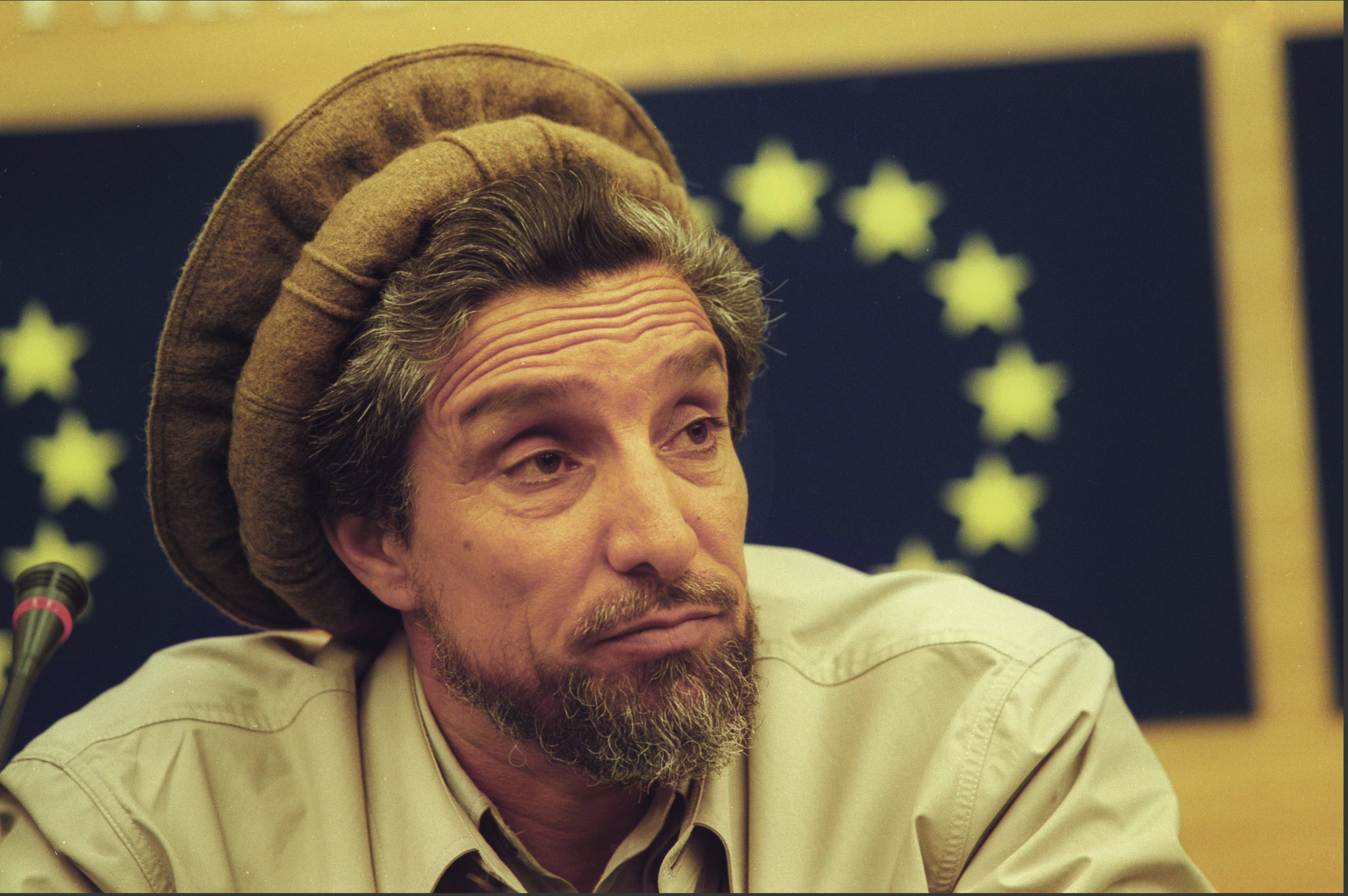
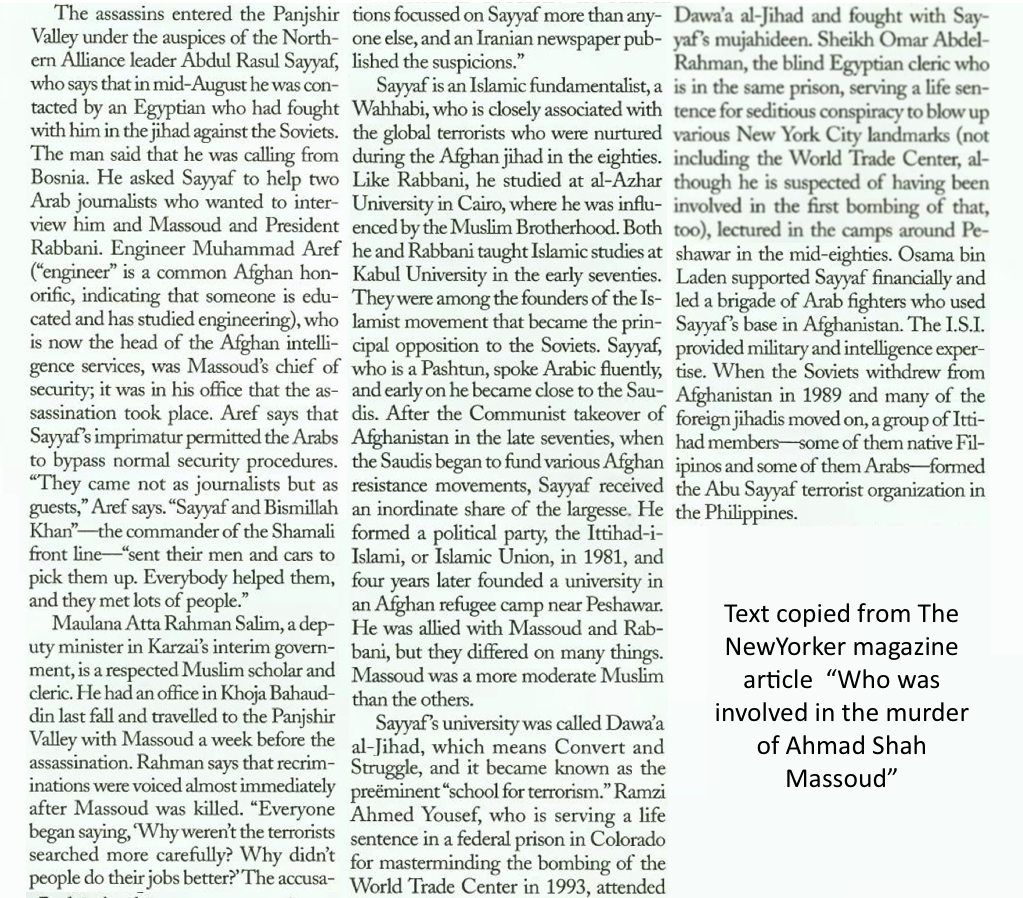
The second link between Sayyaf and 9/11 is circumstantial, relating to the murder of Ahmad Shah Massoud two days before 9/11, an event that appears to have been a prerequisite for the attacks. Sayyaf had hosted, vouched for and urged Massoud to meet with his assassins posing as journalists, as detailed in a
New Yorker magazine article copied here.

The final Sayyaf / 9/11 link I’ll cite is damning in my opinion, proving his absolute complicity and commanding role in the attacks. Around the same time Sayyaf had gained access to Massoud for the assassins – mid August 2001 – the hijackers in America sent Ramzi bin al-Shibh in Germany a coded message via an online messaging service (
very likely setup by Mohamedou Slahi) that stated:

“The first semester commences in three weeks.
Two high schools and two universities.
This summer will surely be hot.
Nineteen certificates for private education and four exams.
Regards to the professor. Goodbye.”
Source: 2002 Al Jazeera report
- the 9/11 hijacker message above is a clear confirmation of their attack plan and signed off with “Regards to the Professor”.
Abdul Rasul Sayyaf is a Professor of Islamic law, and given his relationship with KSM and role in Massoud’s murder,
I have no doubt that Sayyaf is the Professor referred to in the 9/11 hijackers' message.


Gallery
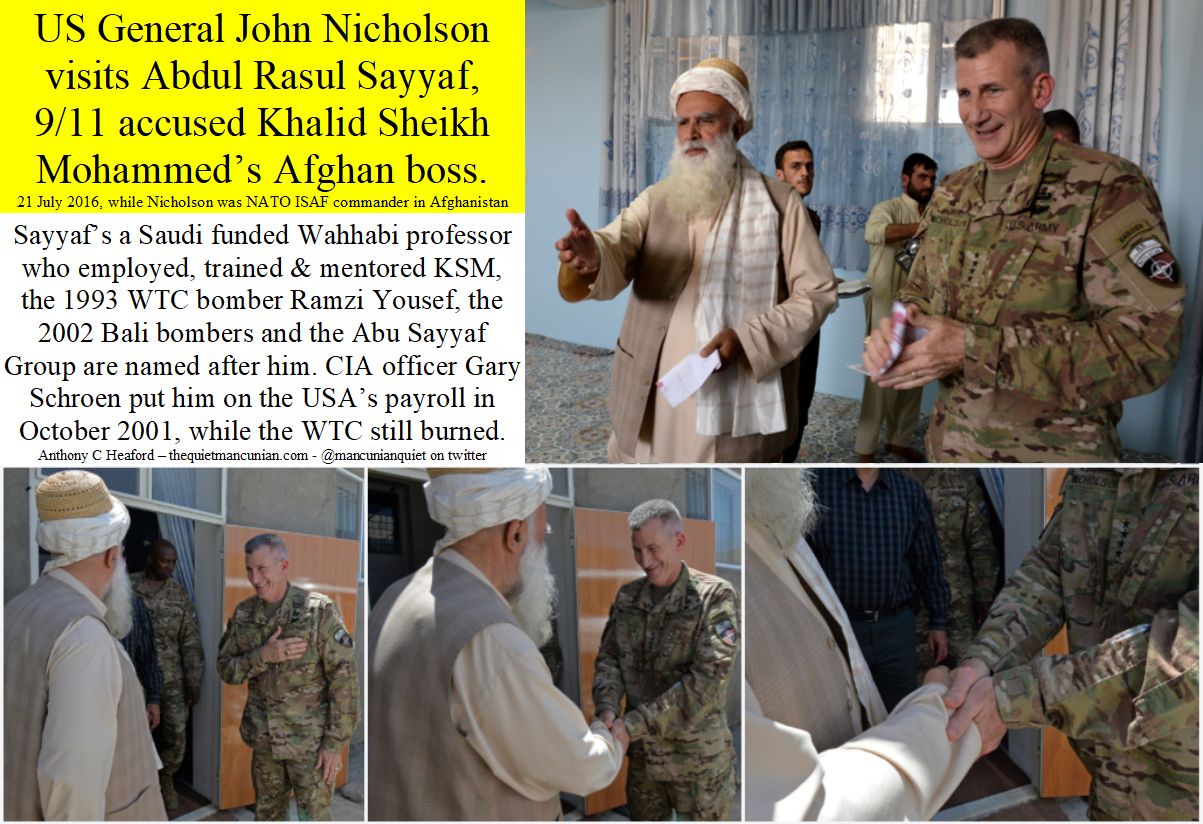
Sayyaf & General John Nicholson
Sayyaf NATO's senior civilian representative
Sayyaf & General Scott Miller
Sayyaf in Turkey, 2022
The Professor
Sayyaf in chain, God Willing


CIA officer Gary Schroen put Sayyaf on their payroll in October 2001:
“I produced a $100,000 bundle of cash from my backpack and handed it across the table to Sayyaf,
who instinctively took the package... Sayyaf looked at me and his eyes narrowed.
“That is the first time I have ever accepted cash directly from anyone.” He shook his head
as if he had been tricked, eying me carefully, a slight smile on his lips. We rose and thanked
him for agreeing to assist the US government, and we shook hands.”
Schroen’s 2006 book ‘First In: How Seven CIA Officers Opened the War on Terror in Afghanistan’
Having admitted he put Abdul Rasul Sayyaf on the CIA / US payroll in October 2001, is it possible senior CIA officer Gary Schroen didn’t know about Sayyaf’s links to International Terrorism? Gary Schroen died in 2022 so we can’t ask him, but his boss George Tenet – CIA director from 1996-2004 - is still with us. Putting KSM’s Afghan boss on the CIA payroll instead of in a prison cell could’ve been excused as an error or oversight if it wasn’t for the 2004 9/11 Commission report that details Sayyaf’s intimate links to terrorist entities worldwide. But instead of arresting Sayyaf in 2004, he continued to prosper under the CIA and NATO’s protection.
In the Afghanistan 2014 elections Sayyaf ran for President, but was knocked out in the first round with a 7.1% share of the vote. That was the first time I heard of Sayyaf, after my summer 2012 tour of Helmand with the British army, when I read this news headline:
“Former Islamist warlord who brought bin Laden to Afghanistan to run for president
A former Islamist warlord who reputedly invited Osama bin Laden to live
in Afghanistan has joined the race to become the next Afghan president.”
Being the Arab’s ‘fair-haired child' ( as the CIA described Sayyaf in 1985) it was natural Sayyaf was allied with Osama bin Laden during the 1980s Jihad, but it should be noted that OBL returned to Arabia as soon as the Soviets left Afghanistan, in February 1989. It was KSM who stayed with Sayyaf until 1992, after which KSM and Ramzi Yousef commenced their terrorist spree with the February 1993 World Trade Center bomb. What the new headline above is referring to is OBL’s return to Afghanistan in 1996, when it’s widely believed that Sayyaf (allied to the Northern Alliance) offered him sanctuary there. OBL was initially hosted by allies of Sayyaf but was soon passed off to Sayyaf and the Northern Alliance’s enemy – the Taliban. Was that a Machiavellian move by Sayyaf, lumbering his enemy with a man being hunted by the CIA? OBL wasn’t charged with a crime unit 1998 but the CIA had been spying on him for years, first by Billy Waugh in Sudan, and then by the dedicated CIA Alec Station from January 1996.